
HuMOLYTE Presents Chemotherapy Support Research at the 2026 Microbiome Forum
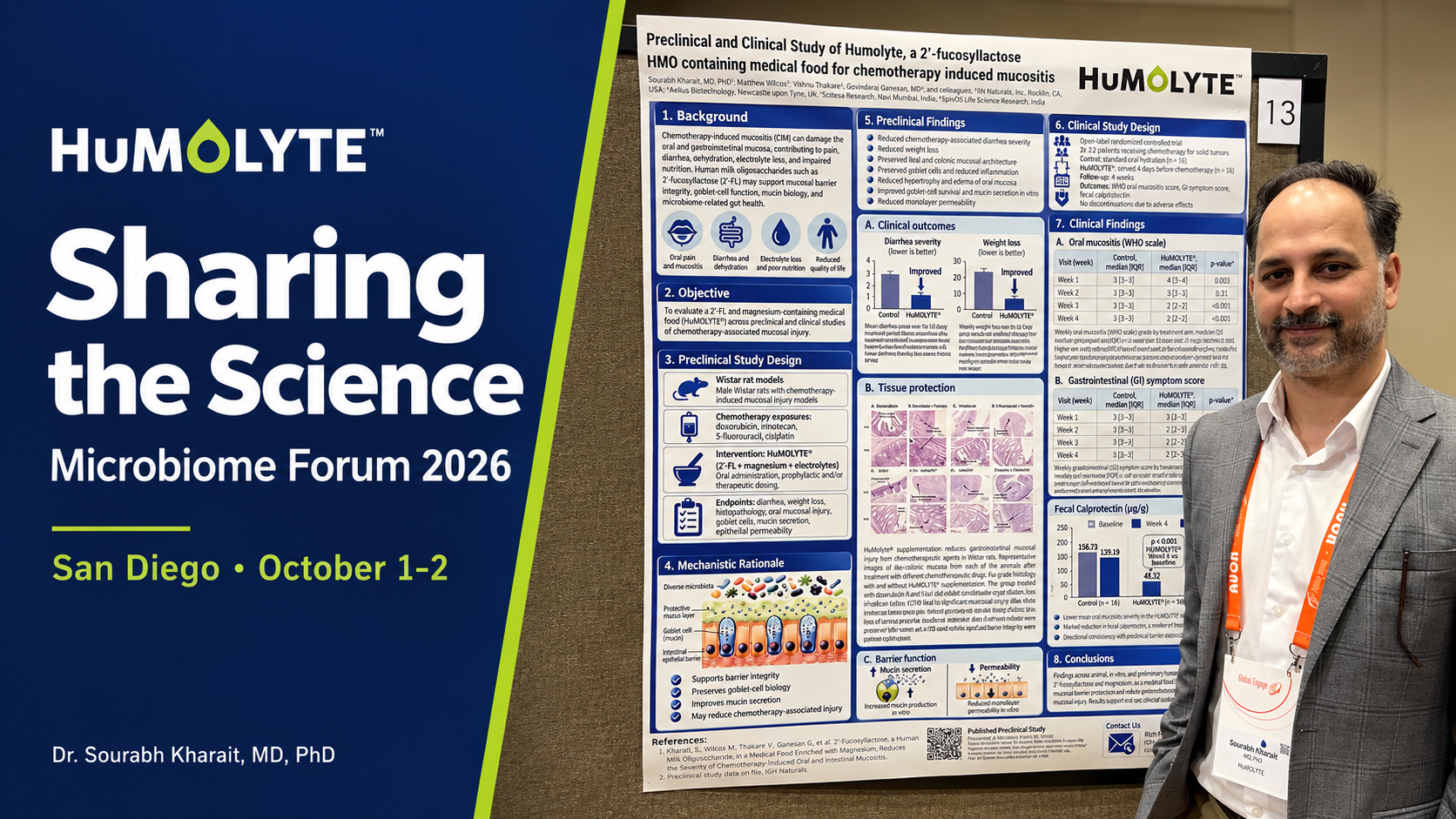
HuMOLYTE shared its latest preclinical and clinical research at the Microbiome R&D & Business Collaboration Forum: USA, held October 1–2, 2026, in San Diego. Dr. Sourabh Kharait presented our work investigating how a formulation combining a human milk oligosaccharide with electrolytes may help address chemotherapy-related injury to the mouth and digestive tract.
Alongside the presentation, we shared a research poster bringing together laboratory findings, animal studies, and results from an initial 32-patient clinical study.
For our team, the conference was an opportunity to bring this research into a broader conversation about nutrition, the intestinal barrier, and supportive care for people undergoing cancer treatment.
Watch Dr. Kharait’s presentation
The problem behind the research
Mouth sores, diarrhea, and abdominal discomfort can make eating and drinking difficult during chemotherapy. When the digestive lining is injured, maintaining hydration and nutrition can become another challenge for patients already dealing with cancer treatment.
That injury is the focus of our research into mucositis, inflammation and damage affecting the lining of the mouth and digestive tract.
HuMOLYTE combines 2′-fucosyllactose, or 2′-FL, with electrolytes including magnesium, potassium, and sodium. 2′-FL is a human milk oligosaccharide, a type of complex sugar found naturally in human milk. The research explores whether this combination can help support the gut’s protective lining while providing electrolytes.
What we presented
Dr. Kharait outlined three stages of research:
Laboratory studies: Experiments found improved goblet cell survival, increased mucin secretion, and reduced permeability in a model of the intestinal barrier. Goblet cells produce mucin, a major component of the mucus that protects the gut lining.
Preclinical animal studies: Research in Wistar rats found less severe diarrhea, less weight loss, and better preservation of intestinal tissue after chemotherapy in animals receiving HuMOLYTE. This work was published in Frontiers in Nutrition in June 2026.
An initial human study: A randomized, open-label study followed 32 patients with solid tumors across one chemotherapy cycle, with 16 patients in each group and four weeks of follow-up.
The human study reported lower gastrointestinal symptom scores in the HuMOLYTE group beginning in week 2. Oral mucositis scores were worse in that group in week 1, similar in week 2, and significantly lower in weeks 3 and 4.
Researchers also measured fecal calprotectin, a stool marker of intestinal inflammation. Average levels in the HuMOLYTE group decreased from 160.13 to 48.34 µg/g by week 2, approximately a 70% reduction from baseline. This represents a change in an inflammation marker, rather than a measured percentage of tissue healing.
Explore our research poster
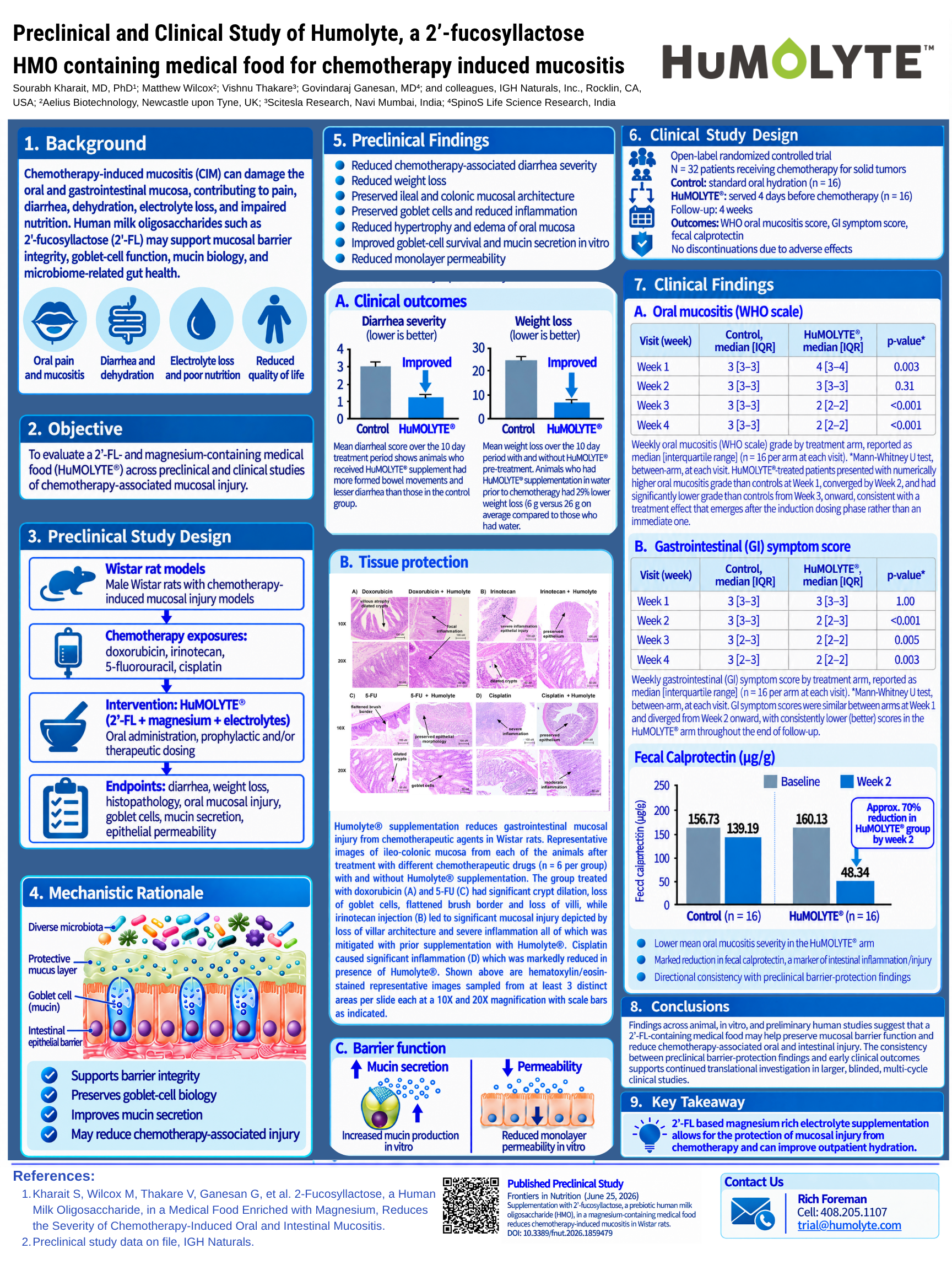
HuMOLYTE research poster showing laboratory, animal, and preliminary human findings on chemotherapy-induced mucositis.
The next questions
Presenting these findings is an important step in continuing the research. The initial human study was small, open-label, and limited to one chemotherapy cycle. Larger, blinded studies across multiple cycles are needed to confirm the findings and evaluate whether benefits persist.
The study did not measure changes in the microbiome. During the presentation and audience discussion, Dr. Kharait identified longer-term study of gut bacteria and their metabolites as a future priority.
We also want to understand whether improvements in symptoms and inflammation translate into practical outcomes, such as less need for IV hydration or fewer treatment interruptions. Those outcomes have not been established by the research presented here.
Continuing the conversation
We appreciate the opportunity to share our work with the microbiome research community. Our focus remains on a practical goal: investigating nutritional support that could help people better tolerate chemotherapy.
Watch the presentation and explore the poster above for a closer look at the research. Clinicians, researchers, and potential collaborators can contact Rich Foreman at trial@humolyte.com to continue the conversation.

About Dr. Sourabh Kharait
Dr. Sourabh Kharait, MD, PhD, is a nephrologist and transplant physician, Associate Professor of Medicine at the University of Arizona, and founder of IGH Naturals, the company developing HuMOLYTE. His research connects nutrition and electrolyte management with the challenges of chemotherapy-related mucosal injury.
For more information on how HuMOLYTE can support your gut health during chemotherapy, visit our product page or consult your health care provider.
This blog was reviewed by Dr. Sourabh Kharait.
This blog is for educational purposes only and is not intended as medical advice. Always consult with your healthcare provider before making any changes to your treatment plan, hydration strategies, or diet. The information provided here is based on general insights and may not apply to individual circumstances.
