
July Cancer Awareness Campaigns: Guide for Patients and Caregivers
Every July, cancer organizations use awareness campaigns to bring attention to cancers that are often rare, misunderstood, or diagnosed later than they should be.
That matters.
A growing lump. Ongoing bone pain. Stomach symptoms that do not make sense. A mouth sore that will not heal. These may seem small at first. But sometimes, small symptoms are the body’s way of asking for help.
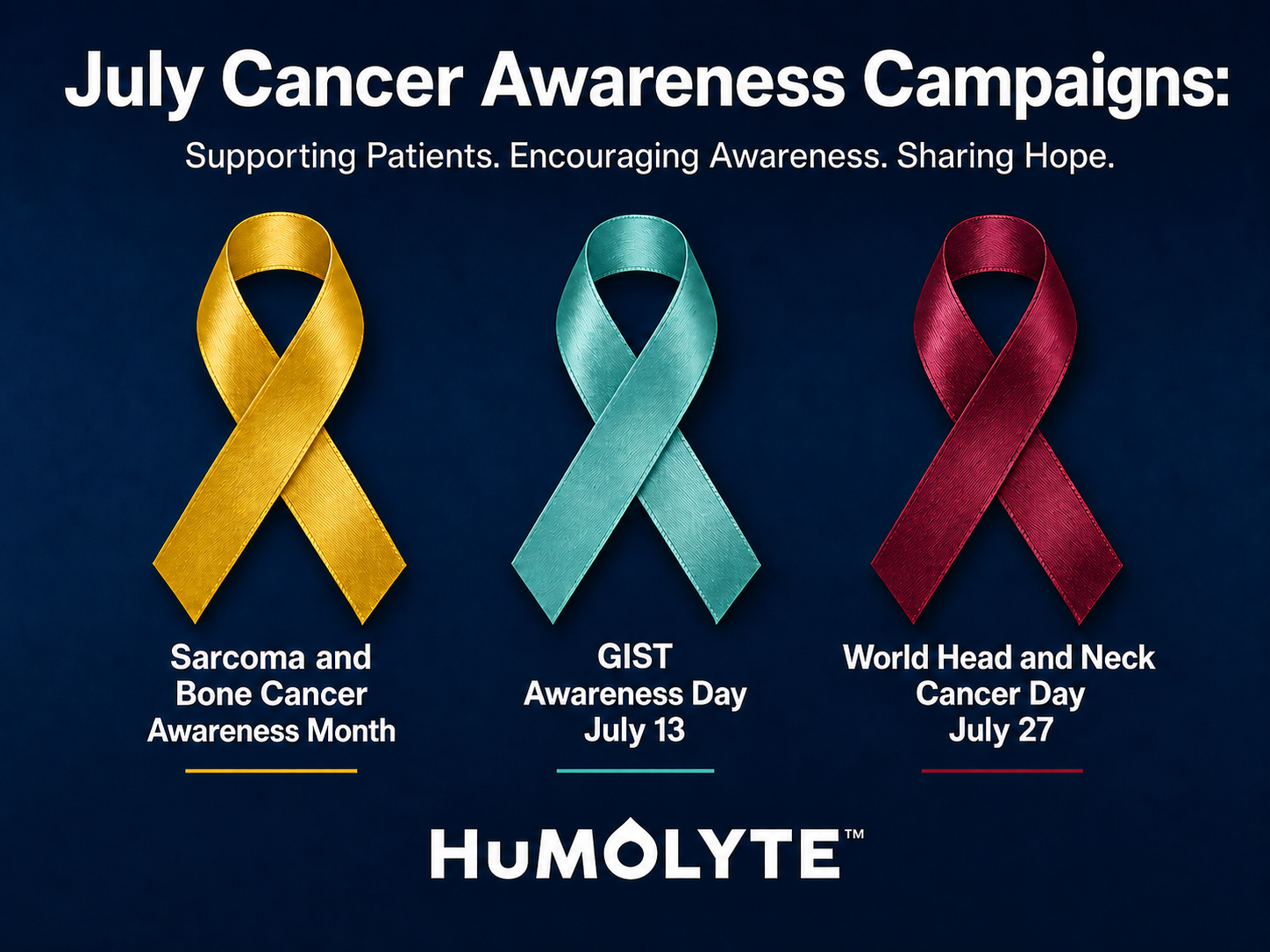
July’s major cancer awareness campaigns include Sarcoma and Bone Cancer Awareness Month, GIST Awareness Day on July 13, and World Head and Neck Cancer Day on July 27.
These campaigns are not just dates on a calendar. They are reminders to pay attention, ask questions, and support people going through cancer treatment.
For patients and caregivers, awareness can lead to action.
1. Sarcoma and Bone Cancer Awareness Month
July is Sarcoma and Bone Cancer Awareness Month.
Sarcoma is a rare type of cancer that starts in the bones or soft tissues of the body. Soft tissue includes muscle, fat, blood vessels, nerves, tendons, and tissue around joints.
Sarcoma can happen almost anywhere in the body. That is one reason it can be hard to notice early.
Some people may find a lump. Others may feel pain, swelling, or pressure. Bone sarcoma may cause bone pain, trouble moving, swelling near the affected area, or fractures that happen more easily than expected.
Because sarcoma is rare, it may not be the first thing people think about. That is why this awareness month is important.
What patients and caregivers should watch for:
A lump that is growing
A lump that is painful or deep
Swelling that does not go away
Bone pain that gets worse
Trouble moving part of the body
Unexplained pain that continues over time
The recommendation is simple: do not ignore a new lump or ongoing pain. Ask your doctor if imaging, a biopsy, or a specialist referral is needed.
A biopsy means a doctor removes a small sample of tissue so it can be checked under a microscope.
2. GIST Awareness Day — July 13
GIST Awareness Day is observed on July 13.
GIST stands for gastrointestinal stromal tumor. In plain English, GIST is a rare cancer that starts in the digestive tract. It most often begins in the stomach or small intestine.
GIST can be hard to understand because symptoms may be vague. Some people may have stomach pain, nausea, fatigue, bleeding, or a feeling of fullness after eating only a small amount.
Others may not notice symptoms until the tumor is found during testing for another problem.
That makes awareness important. Patients and caregivers need to know that digestive symptoms should not always be brushed off, especially when they are new, ongoing, or getting worse.
Possible signs of GIST may include:
Stomach pain or discomfort
Feeling full quickly after eating
Nausea or vomiting
Fatigue
Blood in stool or vomit
Unexplained anemia
Unexplained weight loss
Not every stomach issue means cancer. Most do not. But symptoms that continue, worsen, or feel unusual should be discussed with a healthcare provider.
Caregivers can help by:
Tracking symptoms
Keeping a medication list
Writing down questions before appointments
Helping the patient stay hydrated
Asking the care team about nutrition support
Looking for patient groups focused on rare cancers
Rare cancers can feel lonely. Awareness days help patients find better information, support groups, and doctors who understand their diagnosis.
3. World Head and Neck Cancer Day — July 27
World Head and Neck Cancer Day is recognized on July 27.
This campaign raises awareness about cancers that affect the mouth, throat, voice box, sinuses, nasal cavity, salivary glands, and nearby areas.
These cancers can affect speaking, swallowing, eating, breathing, and daily comfort.
Some symptoms may seem minor at first. A sore throat. A hoarse voice. A mouth sore. A lump in the neck.
But when symptoms do not go away, they should be checked.
Possible warning signs include:
A mouth sore that does not heal
A lump in the neck
Trouble swallowing
Ongoing throat pain
Hoarseness that does not improve
Pain or bleeding in the mouth
Ear pain without a clear cause
Trouble chewing
Unexplained weight loss
Not every symptom means cancer. But symptoms that are new, unusual, or persistent deserve attention.
My suggestion is simple: if something lasts longer than expected, get it checked by a doctor or dentist.
Why July Cancer Awareness Matters During Treatment
Cancer awareness often focuses on prevention and early detection.
That is important.
But awareness should also include what happens after diagnosis.
Cancer treatment can affect the whole body. Chemotherapy, radiation, immunotherapy, and other therapies may cause side effects that make daily life harder.
Patients may struggle with:
Nausea
Diarrhea
Mouth sores
Poor appetite
Fatigue
Dehydration
Trouble eating or drinking
Changes in taste
Low energy
These side effects are not “small things.” They can affect strength, comfort, hydration, nutrition, and quality of life.
Supportive care means care that helps manage symptoms and improve daily life during treatment. This may include hydration support, nutrition guidance, mouth care, nausea control, pain relief, emotional support, and caregiver education.
At HuMOLYTE, we believe cancer care should focus on the whole person.
Not just the tumor.
Not just the lab report.
The patient.
Hydration and Nutrition Should Be Part of the Conversation
During cancer treatment, hydration can become harder than expected.
Mouth sores may make drinking painful. Nausea may reduce fluid intake. Diarrhea may cause the body to lose water and electrolytes. Fatigue may make it difficult to keep up with meals and fluids.
Electrolytes are minerals that help the body manage fluid balance, muscle function, and other important processes. Common electrolytes include sodium, potassium, and magnesium.
Patients and caregivers can ask the care team practical questions:
How much fluid should I drink each day?
Needs may vary based on treatment, symptoms, and medical history.Should I use an electrolyte drink?
Some patients may benefit from electrolyte support, but the oncology team should guide this.What symptoms should I report right away?
Severe diarrhea, vomiting, dizziness, confusion, fever, or signs of dehydration should be discussed quickly.What should I do if mouth sores make drinking difficult?
The care team may recommend mouth rinses, pain control, or nutrition support.Should I speak with a dietitian?
Oncology dietitians can help patients adjust food and fluids during treatment.
Patients should always check with their oncology team before adding any new nutrition product, supplement, or medical food during cancer treatment.
How to Support July Cancer Awareness Campaigns
You do not need a huge platform to help.
Small actions matter.
Share trusted information.
Post a resource from a cancer center, medical organization, or patient advocacy group.Check in on a patient or caregiver.
A simple message can make someone feel less alone.Pay attention to symptoms.
Lumps, ongoing pain, digestive changes, mouth sores, and swallowing problems should not be ignored when they persist.Ask better questions at appointments.
Write questions down before the visit. Bring a caregiver if possible.Talk about supportive care.
Symptom control, hydration, and nutrition should be part of the treatment plan.Support rare cancer awareness.
Sarcoma and GIST patients often need more research, more education, and more community support.
FAQ: July Cancer Awareness Campaigns
What cancer awareness month is July?
July is commonly recognized as Sarcoma and Bone Cancer Awareness Month. July also includes GIST Awareness Day on July 13 and World Head and Neck Cancer Day on July 27.
What is sarcoma?
Sarcoma is a rare cancer that starts in the bones or soft tissues. Soft tissues include muscle, fat, blood vessels, nerves, tendons, and tissue around joints.
What are common signs of sarcoma?
Common signs may include a growing lump, swelling, pain, or trouble moving part of the body. Bone sarcoma may cause ongoing bone pain or swelling. A doctor should check any lump or pain that does not go away.
What is bone cancer?
Bone cancer is cancer that starts in the bone. It is different from cancer that spreads to the bone from another part of the body. Bone cancer may cause pain, swelling, weakness, or fractures.
What is GIST Awareness Day?
GIST Awareness Day is observed on July 13. GIST stands for gastrointestinal stromal tumor, a rare cancer that starts in the digestive tract.
What are possible symptoms of GIST?
Possible symptoms may include stomach pain, nausea, vomiting, feeling full quickly, fatigue, blood in the stool or vomit, anemia, or unexplained weight loss. These symptoms can have many causes, so patients should talk with a healthcare provider.
What is World Head and Neck Cancer Day?
World Head and Neck Cancer Day is recognized on July 27. It raises awareness about cancers of the mouth, throat, voice box, sinuses, nasal cavity, salivary glands, and nearby areas.
What are symptoms of head and neck cancer?
Symptoms may include a mouth sore that does not heal, a lump in the neck, trouble swallowing, ongoing throat pain, hoarseness, mouth pain, bleeding, or ear pain without a clear cause. These symptoms should be checked if they persist.
Why does hydration matter during cancer treatment?
Cancer treatment can cause side effects such as nausea, diarrhea, mouth sores, poor appetite, and fatigue. These can make it harder to drink enough fluids and may increase the risk of dehydration.
What are electrolytes?
Electrolytes are minerals that help the body manage fluid balance, muscle function, and other important processes. Sodium, potassium, and magnesium are common electrolytes.
Should cancer patients use electrolyte products during treatment?
Patients should ask their oncology team before using any electrolyte product, supplement, or medical food during treatment. Every patient’s needs are different.
Why is supportive care important during cancer treatment?
Supportive care helps manage symptoms and improve quality of life. It may include hydration support, nutrition guidance, mouth care, nausea control, pain relief, emotional support, and caregiver education.
Final Takeaway
July’s cancer awareness campaigns remind us to look for warning signs, support rare cancer patients, and talk openly about symptoms during treatment.
The best next step is practical: pay attention to changes in the body, ask your healthcare team direct questions, and make supportive care part of the cancer care plan.
References
July is Sarcoma and Bone Cancer Awareness Month
For more information on how HuMOLYTE can support your gut health during chemotherapy, visit our product page or consult your health care provider.
This blog was reviewed by Dr. Sourabh Kharait.
This blog is for educational purposes only and is not intended as medical advice. Always consult with your healthcare provider before making any changes to your treatment plan, hydration strategies, or diet. The information provided here is based on general insights and may not apply to individual circumstances.
