
Managing Holiday Loneliness With Cancer
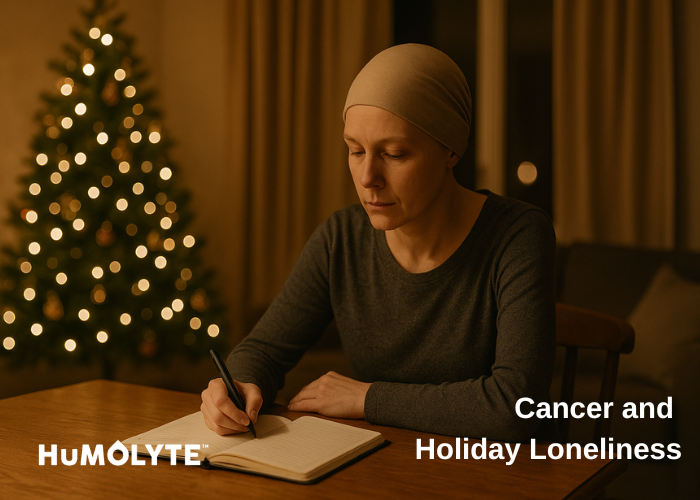
Holiday loneliness is common for people living with cancer and for caregivers—especially during chemotherapy, radiation, recovery, or times when immune safety limits gatherings. If you feel isolated this season, you’re not doing the holidays “wrong.” You’re adapting to a hard reality.
This guide explains why holiday loneliness happens during cancer, what can help right now, and what to do if loneliness feels overwhelming or persistent.
What is holiday loneliness in cancer care?
Holiday loneliness is the emotional pain that can show up when you feel disconnected, unseen, or separated from others during a season that emphasizes togetherness.
For cancer patients and caregivers, loneliness often increases because of:
Treatment schedules and fatigue
Immunocompromised precautions (avoiding crowds, travel, indoor gatherings)
Changes in family roles (you can’t do what you used to)
Grief (loss of health, traditions, loved ones, or a prior life)
Feeling misunderstood (“You look fine,” unwanted advice, pressure to be positive)
Loneliness can happen even when people love you—because cancer changes access, energy, and safety.
Signs you might be carrying holiday loneliness
You may notice:
You dread events—or feel numb about them
You feel “on the outside,” even with family
You withdraw because explaining feels exhausting
You scroll or compare and feel worse
You feel irritable, tearful, or unusually tired
You feel guilty for needing rest or accommodations
What helps right now: 7 practical strategies
1) Shrink connection to a size you can tolerate
Connection doesn’t have to mean a party. Try:
A 10-minute call (set a timer)
Voice notes instead of long conversations
A shared show watched together while texting
One person visiting for 20–30 minutes, not all day
Smaller contact is still real contact.
2) Use “low-explanation” outreach scripts
You can ask for connection without telling your full story.
“I’m feeling isolated this week. Can we do a short call?”
“I don’t have energy for visits, but texts would help.”
“Could we schedule a check-in on Tuesday and Friday?”
“I’m keeping things quiet for health reasons—can we connect virtually?”
3) Create one anchor ritual
A simple ritual gives structure when everything feels different:
Light a candle and take three slow breaths
Make tea each evening and sit by a window for five minutes
Write one sentence: “Today was hard because… / Today helped because…”
Play one calming song every morning
Aim for steady, not “festive.”
4) Reduce the loneliness “amplifiers”
Common amplifiers during cancer:
Overcommitting out of guilt
Staying in conversations that minimize your reality
Doomscrolling or comparison scrolling
Trying to “perform” gratitude or cheer
One small boundary can lower the emotional volume:
“I’m going to rest now, but I love you.”
“We’re not discussing treatments tonight.”
“We’re keeping visits short this season.”
5) Plan one safe, meaningful moment
Pick one moment—not a whole day:
Sit near holiday lights with a warm drink
Open one card, watch one movie, cook one easy dish
Step outside for cool air and a short walk if you’re able
Call one person who makes you feel like yourself
“Meaningful” can be quiet.
6) If you’re a caregiver: name your loneliness out loud
Caregivers often feel isolated because attention flows toward the patient, while you carry logistics and fear. Try:
One conversation where you are the focus
A support group (virtual counts)
A scheduled break—even 30 minutes—where you’re off duty
Your loneliness matters, too.
7) Know when to add professional support
If loneliness becomes persistent, intense, or starts to feel hopeless, consider:
Your cancer center’s social worker or counseling services
A therapist experienced in serious illness or caregiver stress
Support groups (patient or caregiver)
Spiritual care/chaplain services if that fits you
Support is treatment-adjacent care. It counts.
How to handle gatherings when cancer limits your options
If you need to decline or modify plans, try:
“We’re keeping things small because of treatment and immunity.”
“We can’t do indoor gatherings, but we can do a video toast.”
“I can come for 30 minutes, earlier in the day, then I need rest.”
“I’m not up for hosting—thank you for understanding.”
You don’t owe a debate. You’re allowed to protect your health and energy.
What to do if you’re alone on the holiday itself
If you’ll be alone on a key day (or it ends up that way), a simple plan helps:
One connection: schedule one call or text check-in
One comfort: warm food, shower, blanket, favorite show
One task: tiny and achievable (fold laundry, prep meds, tidy one surface)
One outside cue: window open, porch step, short walk, or sunlight by a window
This isn’t about making it magical. It’s about making it survivable and softer.
Key takeaways
Holiday loneliness during cancer is common and understandable.
Connection can be brief, quiet, and still meaningful.
One anchor ritual can stabilize the season.
Caregivers’ loneliness deserves support, not silence.
If loneliness feels overwhelming or hopeless, add professional help.
FAQ
Is holiday loneliness normal during chemotherapy?
Yes. Chemo can limit energy, change routines, and reduce social contact due to infection precautions, which can increase loneliness.
What if I don’t want to talk to anyone?
That can be a protective response to overwhelm. Consider “low-demand” connection (a single text exchange, voice note, or sitting on a call without pressure to talk much).
How do I ask for help without feeling like a burden?
Try specific requests: “Can you text me every other day this week?” or “Can we schedule a 10-minute call?” Clear, small asks are easier for others to follow through on.
How can caregivers manage loneliness when they can’t leave the patient?
Use scheduled check-ins, virtual groups, and a standing “decompression” routine (even 10 minutes). If possible, rotate a trusted person in for brief coverage.
For more information on how HuMOLYTE can support your gut health during chemotherapy, visit our product page or consult your health care provider.
This blog was reviewed by Dr. Sourabh Kharait.
This blog is for educational purposes only and is not intended as medical advice. Always consult with your healthcare provider before making any changes to your treatment plan, hydration strategies, or diet. The information provided here is based on general insights and may not apply to individual circumstances.
