
March Is a Month of Strength, Support, and Awareness: Honoring Colorectal Cancer, Kidney Cancer, and Multiple Myeloma
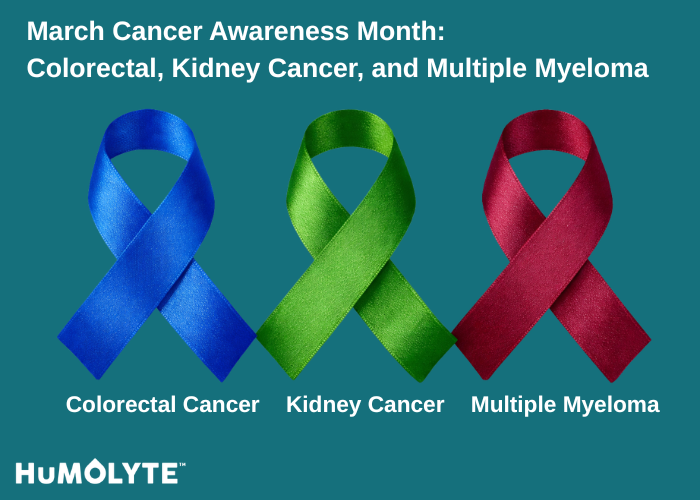
March is a powerful month for cancer awareness. It shines a light on Colorectal Cancer Awareness Month, Kidney Cancer Awareness Month, and Multiple Myeloma Awareness Month. For patients, caregivers, families, and advocates, this month is more than a calendar observance. It is a reminder that awareness can lead to earlier detection, better conversations, stronger support systems, and hope.
A cancer diagnosis can change daily life in an instant. It can bring fear, uncertainty, appointments, treatment decisions, and emotional exhaustion. It can also reveal remarkable courage. Patients learn how strong they are. Caregivers discover how much they can carry. Families learn to hold each other closer. Awareness months like these matter because they help make those journeys more visible and less isolating.
Colorectal Cancer Awareness Month: Why Early Action Matters
Colorectal cancer affects the colon or rectum and is one of the cancers where screening can truly save lives. Many people do not notice symptoms right away, which is why routine screening is so important. When found early, treatment options are often more effective.
For patients, March can be a time to ask important questions:
What screening or follow-up do I need?
What symptoms should I report right away?
How can I support my body during treatment and recovery?
For caregivers, it can be a reminder that practical support matters. Driving someone to a colonoscopy, helping track symptoms, preparing easy-to-digest meals, or simply sitting beside a loved one during a hard conversation can make a meaningful difference.
This awareness month also encourages open discussion about digestive health, symptoms, family history, and prevention. Conversations that once felt uncomfortable can become life-saving.
Kidney Cancer Awareness Month: Paying Attention to the Signs
Kidney cancer can be difficult to detect in its early stages because symptoms may not appear immediately. Some people learn about it after imaging for another issue. That reality can make the diagnosis feel especially unexpected.
For patients, Kidney Cancer Awareness Month can be a moment to feel seen. The path forward may include surgery, targeted therapy, immunotherapy, surveillance, or a combination of care approaches. Each plan is personal, and each patient deserves clear information, compassionate care, and room to ask questions without pressure.
For caregivers, this month is a reminder that support is not only about tasks. It is also about helping a loved one feel grounded. Taking notes at appointments, helping organize medication schedules, and listening without trying to fix every fear can be deeply comforting.
Awareness helps people understand that kidney cancer is not always obvious, and it encourages attention to changes in health, routine medical care, and timely follow-up.
Multiple Myeloma Awareness Month: Understanding a Complex Blood Cancer
Multiple myeloma is a blood cancer that affects plasma cells. Because it can impact the bones, kidneys, blood counts, and immune system, patients may face a wide range of symptoms and complications. Fatigue, bone pain, infections, and uncertainty about what comes next can weigh heavily on both patients and caregivers.
March brings an important opportunity to increase understanding of multiple myeloma and the needs of those living with it. Many patients are navigating long-term treatment, remission, relapse, and ongoing monitoring. That means the journey may feel less like a single event and more like an extended season of adaptation.
Caregivers often become coordinators, encouragers, researchers, and companions all at once. That role can be meaningful, but it can also be exhausting. This month is also for them. Caregivers need support, rest, and recognition too.
Awareness can help communities better understand the emotional and physical complexity of living with a blood cancer that may require ongoing care over time.
For Patients: You Do Not Have to Carry This Alone
If you are living with colorectal cancer, kidney cancer, or multiple myeloma, March is a reminder that your experience matters. Whether you were diagnosed recently, are in treatment now, living in remission, or managing long-term care, your story has value.
It is okay to feel strong one day and overwhelmed the next. It is okay to ask more questions. It is okay to seek a second opinion. It is okay to lean on people who want to help.
Awareness is not only about facts and ribbons. It is about people. It is about making sure patients feel informed, supported, and less alone.
For Caregivers: Your Presence Matters More Than Perfection
Caregivers often put their own needs last. They manage schedules, provide transportation, handle meals, monitor symptoms, and try to stay emotionally steady for everyone else. But caregiving is demanding, and no one does it perfectly.
This March, let awareness include caregivers too. Small acts matter. So does asking for help. So does taking a break. Supporting someone through cancer is not about having all the answers. It is about showing up, again and again, with compassion.
Your care matters. Your fatigue matters too. Both can be true at the same time.
How to Honor These Awareness Months in March
There are many meaningful ways to recognize Colorectal Cancer Awareness Month, Kidney Cancer Awareness Month, and Multiple Myeloma Awareness Month:
Learn about symptoms, risk factors, and screening recommendations
Encourage loved ones to keep up with recommended checkups and screenings
Share trusted educational resources
Support a patient or caregiver with practical help
Start a conversation that helps reduce fear or stigma
Wear awareness colors or participate in local awareness events
Donate, advocate, or amplify patient stories
Even one conversation can make a difference. Even one appointment kept on time can matter. Even one moment of support can help someone feel less alone.
A Month That Calls Us to Notice, Support, and Act
March reminds us that awareness is not passive. It asks us to notice. To speak up. To check in. To learn more. To support those facing colorectal cancer, kidney cancer, and multiple myeloma with compassion and dignity.
For every patient walking through uncertainty, and for every caregiver carrying love and worry side by side, this month is for you.
Awareness matters because people matter.
For more information on how HuMOLYTE can support your gut health during chemotherapy, visit our product page or consult your health care provider.
This blog was reviewed by Dr. Sourabh Kharait.
This blog is for educational purposes only and is not intended as medical advice. Always consult with your healthcare provider before making any changes to your treatment plan, hydration strategies, or diet. The information provided here is based on general insights and may not apply to individual circumstances.
