
Managing the Breaking Bad Effect: How Cancer Can Change Mood, Personality, and Family Communication
Cancer Can Affect More Than the Body
When someone hears the word “cancer,” most people think about physical symptoms first. They may expect fatigue, nausea, pain, or hair loss.
But cancer can also affect emotions, mood, and behavior.
Some patients may become more irritable, angry, anxious, numb, or depressed. These changes can feel sudden and confusing. Families may wonder, “Why is my loved one acting so different?”
This experience is sometimes described as the “Breaking Bad Effect.” It refers to major mood or personality shifts that can happen during cancer and cancer treatment.
These changes can be painful for both the patient and the caregiver. But they are not always a sign of someone’s true character. In many cases, they may be linked to biology, stress, medication, inflammation, or the heavy emotional load of cancer.
The National Cancer Institute notes that cancer and its side effects can affect how a person feels emotionally, including anger, sadness, fear, stress, and depression. The American Cancer Society also explains that anxiety, distress, depression, and loneliness are common for patients, families, and caregivers.
What Is the “Breaking Bad Effect” in Cancer?
The “Breaking Bad Effect” is a simple way to describe a hard reality: cancer can change how a person thinks, feels, and reacts.
A patient who was once calm may suddenly become short-tempered. Someone who was very social may become quiet or emotionally distant. A person who was patient may begin snapping at loved ones.
These changes may show up as:
Sudden anger
Irritability
Anxiety
Emotional numbness
Depression
Crying spells
Trouble controlling impulses
Personality changes
Hostile outbursts
Withdrawal from family
For caregivers, these moments can feel personal. It may seem like the patient is attacking, blaming, or pushing people away.
But many of these changes may be symptoms. They may be part of the cancer experience, not a personal failure.
Why Cancer Can Cause Mood and Personality Changes
Cancer is not only a physical illness. It affects the whole person.
Mood changes may come from many causes, including:
The stress of diagnosis
Pain or fatigue
Poor sleep
Fear about the future
Medication side effects
Chemotherapy or radiation effects
Hormone changes
Infection or inflammation
Changes in appetite or nutrition
Depression or anxiety
Brain tumors or cancer that affects the nervous system
One important cause discussed in the transcript is inflammation.
When the body is dealing with cancer, tumors and cancer treatments may trigger inflammation. This can involve tiny proteins called cytokines. Cytokines help the immune system communicate, but high or ongoing inflammation may affect brain function and mood.
Research has linked cancer-related inflammation with depressive symptoms. Some studies have found that markers such as IL-6, TNF, and CRP may be connected with depression in people with cancer.
This does not mean every mood change is caused by cytokines. It means mood and personality changes deserve medical attention, just like pain, nausea, or fever.
Do Not Treat Mood Changes as “Bad Behavior” Only
When a patient lashes out, it is normal for caregivers to feel hurt. A harsh comment from someone you love can stay with you.
But it may help to pause and ask:
“Could this be a symptom?”
That question can change the whole conversation.
Instead of thinking, “They are being cruel,” you may begin to think, “Something may be happening in their body or brain.”
This does not mean hurtful behavior should be ignored. It also does not mean caregivers should accept abuse. But it does mean the family can move from blame to action.
A better goal is:
Name the behavior. Track the pattern. Bring it to the medical team. Ask for help.
Step 1: Understand the Possible Causes
The first step is to write down possible biological and medical triggers.
In your notebook, start a section called:
Possible Causes of Mood Changes
Then list items such as:
Inflammation
Pain
Fatigue
Poor sleep
Medication changes
Steroids
Chemotherapy side effects
Anxiety
Depression
Fear
Appetite changes
Brain changes
Hormone changes
This list is not meant to diagnose the patient at home. It is meant to help you prepare for a better medical conversation.
Patients and caregivers should tell the oncology team when mood or behavior changes appear. The care team may want to review medications, symptoms, lab work, sleep, pain levels, or mental health needs.
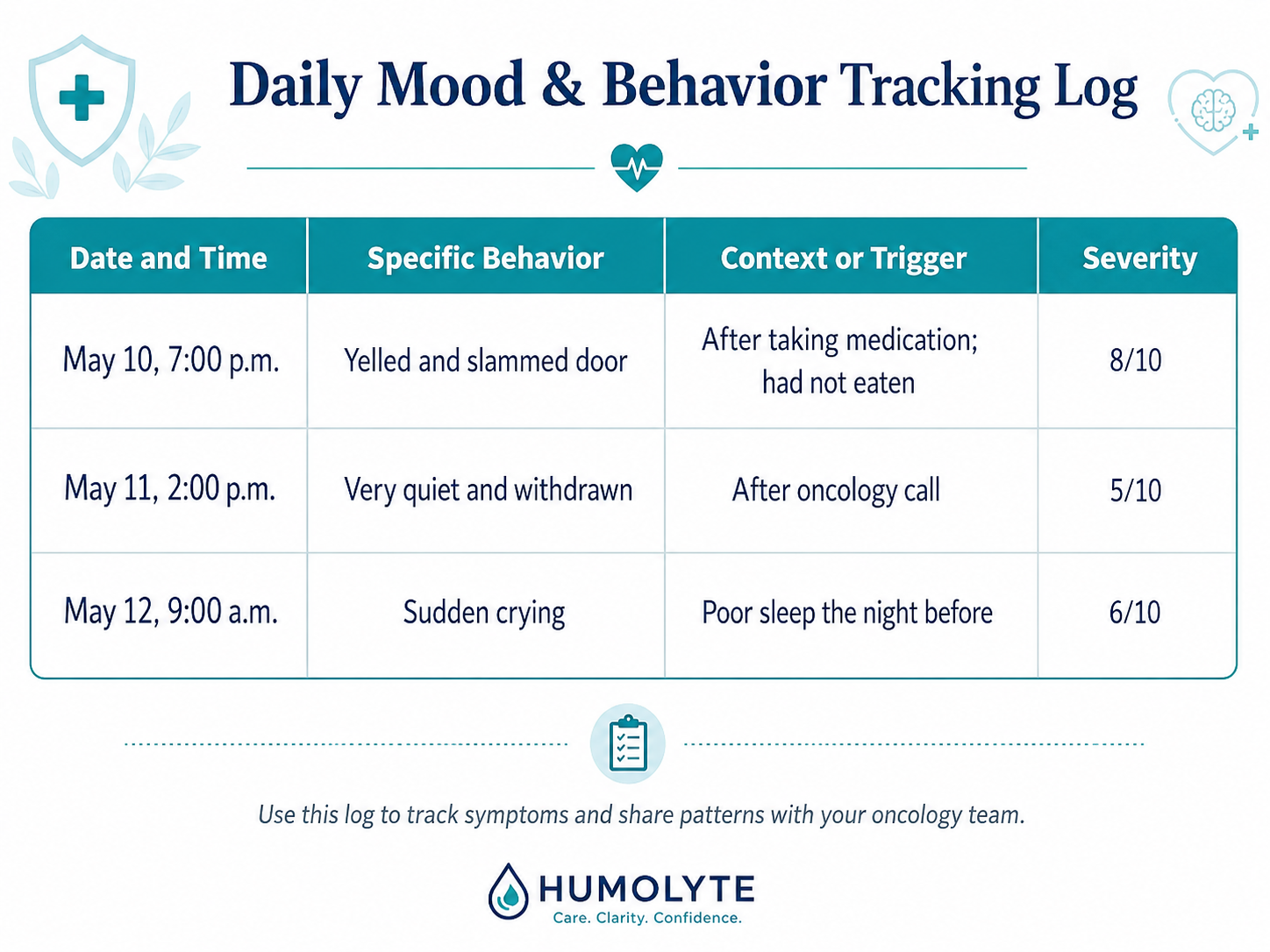
Step 2: Track Mood and Behavior Like Medical Data
Many caregivers feel guilty writing down a loved one’s negative behavior.
But this is not a scorecard. It is a symptom log.
Just as you might track pain, fever, nausea, or appetite, you can also track mood and behavior changes.
Create four columns:
Date and TimeSpecific BehaviorContext or TriggerSeverityMay 10, 7:00 p.m.Yelled and slammed doorAfter taking medication; had not eaten8/10May 11, 2:00 p.m.Very quiet and withdrawnAfter oncology call5/10May 12, 9:00 a.m.Sudden cryingPoor sleep the night before6/10
Keep the notes simple and factual.
Instead of writing:
“He was mean again.”
Write:
“He yelled for 10 minutes after dinner and said he wanted to be left alone.”
Instead of writing:
“She is acting impossible.”
Write:
“She refused medication and cried for 20 minutes after the appointment.”
This kind of tracking helps the doctor see patterns.
Step 3: Bring the Log to the Oncology Team
Mood and personality changes should be discussed with the cancer care team.
At the next appointment, the patient might say:
“I am having shifts in my mood and personality. I want to report this as medical information.”
A caregiver might say:
“We have noticed changes in mood, anger, anxiety, and withdrawal. I wrote down dates, triggers, and severity so the care team can review the pattern.”
Then ask these three questions:
Could inflammation or the cancer itself be playing a role?
Could this be a side effect of medication or treatment?
Can you refer us to psycho-oncology, counseling, psychiatry, or caregiver support?
This is important because emotional symptoms deserve care. Cancer treatment should support both the body and the mind.
Psycho-oncology is a field that helps people with the emotional, mental, and social effects of cancer. It may support patients with anxiety, depression, fear, sleep problems, communication issues, and coping skills.
Step 4: Use Blame-Free Communication at Home
Cancer can create tension in a home. Patients may feel scared, tired, or out of control. Caregivers may feel overwhelmed, hurt, or unappreciated.
Blame-free communication can help.
Try saying:
“I know this illness is putting pressure on both of us. I want us to talk about what happened without blaming each other.”
Or:
“When the anger comes up, I want to remember that cancer and treatment may be part of this. But we still need a plan to keep both of us safe and supported.”
Or:
“I love you, and I also need us to talk with the care team about these mood changes.”
The goal is not to pretend everything is fine. The goal is to make the problem something you face together.
Step 5: Protect the Caregiver’s Mental Health
Caregivers often focus so much on the patient that they forget their own health.
But caregiver stress is real. The National Cancer Institute lists common caregiver effects such as fatigue, sleep problems, anxiety, depression, appetite changes, headaches, and high blood pressure.
Caregivers need support too.
Helpful caregiver rules may include:
Join a local or online cancer caregiver support group
Schedule regular respite care
Talk to a counselor or therapist
Ask family or friends for specific help
Take breaks without guilt
Tell the medical team when home stress is rising
Set safety limits around yelling, threats, or aggression
Caregiving is not only an act of love. It is also hard work. No caregiver should have to carry it alone.
When to Get Help Right Away
Some mood changes need urgent help.
Call the oncology team, local emergency number, or crisis service right away if the patient:
Talks about suicide or wanting to die
Threatens to hurt someone else
Becomes physically aggressive
Seems confused or disoriented
Has sudden extreme personality changes
Has hallucinations or paranoia
Cannot sleep for long periods
Refuses needed medication or fluids
Shows signs of infection, fever, or severe weakness
These may be signs of a medical emergency, medication reaction, severe distress, infection, or another serious issue.
A Simple Cancer Mood Change Action Plan
Here is a simple plan you can use today.
1. Name the problem
Say:
“We are noticing mood and personality changes. We are going to treat them as medical symptoms.”
2. Track the pattern
3. Bring the log to the doctor
Ask about inflammation, medication side effects, and mental health referrals.
4. Ask for psycho-oncology support
Request counseling, psychiatry, social work, or support services.
5. Support the caregiver
Build in rest, counseling, support groups, and backup help.
Final Thoughts: Mood Changes Are Real Symptoms
Cancer is a mind and body experience.
If you or your loved one is dealing with sudden anger, anxiety, depression, emotional numbness, or personality changes, do not ignore it. Do not assume it is “just stress” or “just bad behavior.”
Track it. Talk about it. Bring it to the medical team.
The goal is not blame. The goal is understanding, safety, and better care.
With a clear action plan, families can move from confusion and resentment to structure and support.
FAQ: Cancer Mood Changes and the Breaking Bad Effect
Can cancer cause personality changes?
Yes, cancer and cancer treatment can sometimes affect mood, behavior, and personality. These changes may be linked to stress, fatigue, pain, medications, inflammation, depression, anxiety, or changes in the brain.
What is the Breaking Bad Effect in cancer?
The “Breaking Bad Effect” is a phrase used to describe sudden mood or personality changes in some cancer patients. It may include anger, irritability, emotional numbness, anxiety, or depression.
Are cancer mood swings the patient’s fault?
Not always. Mood swings may be symptoms of cancer, treatment, medication side effects, inflammation, pain, poor sleep, or emotional distress. Hurtful behavior should still be addressed, but it should also be reported to the care team.
How can caregivers track cancer mood changes?
Caregivers can use a simple log with four columns: date and time, specific behavior, context or trigger, and severity. This helps turn emotional events into useful medical information.
Who should I talk to about cancer-related mood changes?
Start with the oncology team. Ask whether medication, inflammation, treatment side effects, depression, anxiety, or other medical issues could be involved. You can also ask for a referral to psycho-oncology, counseling, psychiatry, or social work.
For more information on how HuMOLYTE can support your gut health during chemotherapy, visit our product page or consult your health care provider.
This blog was reviewed by Dr. Sourabh Kharait.
This blog is for educational purposes only and is not intended as medical advice. Always consult with your healthcare provider before making any changes to your treatment plan, hydration strategies, or diet. The information provided here is based on general insights and may not apply to individual circumstances.
