Gut Health During Chemotherapy: Why It Matters and How to Support It
Chemotherapy attacks fast-growing cancer cells, but it can also affect healthy cells that grow quickly, including cells in the mouth and digestive tract. This may lead to diarrhea, constipation, nausea, vomiting, appetite changes, mouth sores, and intestinal irritation. Supporting digestive health can help patients maintain hydration, nutrition, comfort, and strength. However, the right approach depends on the chemotherapy drugs being used, the patient’s symptoms, immune status, other health conditions, and guidance from the oncology team.
What Does “Gut Health” Mean?
Gut health refers to how well the digestive system performs its many jobs. It includes:
The lining of the mouth, stomach, and intestines
Digestion and absorption of nutrients
Regular bowel function
Fluid and electrolyte balance
The gut microbiome
Interactions between the digestive tract and immune system
The gut microbiome is the community of bacteria, fungi, viruses, and other microorganisms that live mainly in the large intestine. These microorganisms help process some foods and interact with the intestinal lining and immune system.
Digestive symptoms during cancer treatment are not always caused by microbiome changes. Diarrhea, constipation, nausea, and abdominal discomfort may also result from:
Direct effects of chemotherapy
Antibiotics
Opioid pain medicines
Anti-nausea medicines
Immunotherapy
Radiation therapy
Surgery
Infection
Reduced food or fluid intake
Lower physical activity
The cancer itself
Finding the cause matters because treatment for one problem may make another problem worse. For example, adding fiber may help some people with constipation but may worsen active diarrhea or certain bowel conditions.
How Chemotherapy Can Affect the Digestive System
Chemotherapy works by damaging cells that divide quickly. Cancer cells often divide quickly, but so do some healthy cells in the mouth and digestive tract. When these healthy tissues are affected, patients may develop:
Diarrhea
Constipation
Nausea
Vomiting
Reduced appetite
Abdominal discomfort or cramping
Mouth or throat sores
Changes in taste or smell
Difficulty swallowing
Problems absorbing fluids or nutrients
These side effects vary widely. One person may have mild nausea for a few days, while another may develop severe diarrhea or dehydration requiring medical treatment.
The risk and severity depend on factors such as:
The chemotherapy drug or drug combination
The dose
How often treatment is given
Other cancer treatments being used
The location and type of cancer
The patient’s age and overall health
Medicines being taken for pain, nausea, infection, or other conditions
Patients should tell their oncology team about new digestive symptoms early. Many side effects are easier to manage before they become severe.
Common Digestive Side Effects During Chemotherapy
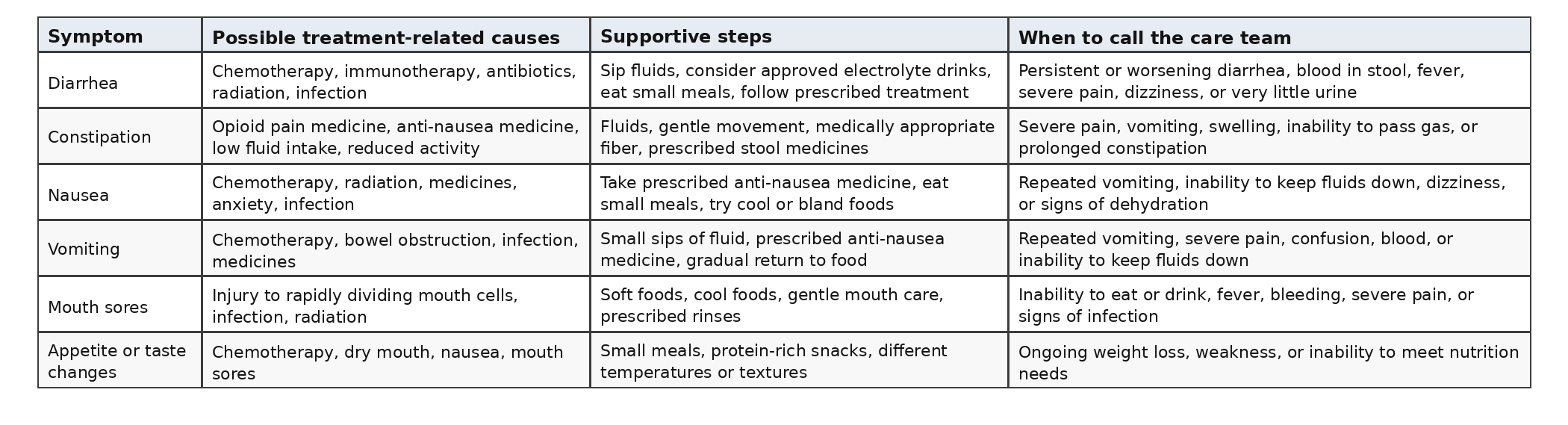
How Chemotherapy May Affect the Gut Microbiome
Chemotherapy and gut health are connected in several ways. Chemotherapy can affect the intestinal lining, food intake, bowel function, and the microorganisms living in the digestive tract.
Researchers sometimes use the term dysbiosis.
Dysbiosis means a disruption in the normal balance or diversity of microorganisms in the gut.
Chemotherapy, antibiotics, illness, hospitalization, dietary changes, and reduced food intake may all contribute to microbiome changes. However, the microbiome is complex, and researchers are still learning which changes are harmful, temporary, or clinically important.
It helps to separate three levels of evidence:
Well-established: Chemotherapy can cause diarrhea, constipation, nausea, mouth sores, appetite changes, and injury to rapidly dividing cells in the digestive tract.
Emerging: Research suggests chemotherapy and other cancer treatments may change the composition or diversity of the gut microbiome.
Not yet proven: It has not been established that taking a particular probiotic, prebiotic, food, or supplement will reliably improve chemotherapy effectiveness or cancer outcomes.
Microbiome research is promising, but it should not be interpreted as proof that patients can “fight cancer naturally” by changing their gut bacteria. Patients should be cautious about products that claim to rebuild the microbiome, repair the intestine, detoxify chemotherapy, or make treatment work better without strong human clinical evidence.
Why Digestive Health Matters During Chemotherapy
Digestive symptoms are not simply an inconvenience. Persistent diarrhea, vomiting, mouth sores, or poor appetite can affect:
Hydration
Sodium, potassium, magnesium, and other electrolyte levels
Calorie and protein intake
Body weight
Energy
Kidney function
Recovery between treatments
Quality of life
The ability to stay on the planned treatment schedule
Severe diarrhea may prevent the body from absorbing enough water and nutrients. Repeated vomiting can also cause fluid and electrolyte losses. In some cases, patients may need blood tests, prescription medicine, intravenous fluids, or treatment in a hospital. Oral hydration is helpful, but it is not always enough.
Safe Ways to Support Gut Health During Chemotherapy
Supportive recommendations should be adjusted to the patient’s symptoms, medical conditions, blood counts, medications, and cancer treatment plan.
Stay Hydrated
Diarrhea and vomiting remove water and electrolytes from the body. Patients may also drink less because of nausea, taste changes, mouth pain, or fatigue.
Helpful strategies may include:
Taking small sips throughout the day
Keeping a drink within reach
Using a straw if it makes drinking easier
Trying cool or room-temperature fluids
Drinking broth or another approved electrolyte-containing beverage
Tracking urine color and frequency
Pale yellow urine and regular urination can be general signs of hydration. Dark urine or urinating much less than usual may signal dehydration, although these clues are not perfect.
Some patients need electrolyte-containing fluids rather than plain water alone. Others may need intravenous fluids.
Patients with kidney disease, heart failure, swelling, low sodium, or another fluid-balance condition should follow individualized instructions from their care team. They should not increase fluids, sodium, potassium, or magnesium without medical guidance.
Eat Small, Manageable Meals
Large meals can feel overwhelming when appetite is low or nausea is present. Many patients tolerate five or six small meals or snacks better than three large meals.
Depending on symptoms, useful options may include:
Toast, crackers, rice, noodles, or potatoes
Eggs, yogurt, poultry, fish, tofu, or smooth nut butter
Soups and soft casseroles
Smoothies or nutrition drinks approved by the care team
Soft, moist foods for mouth sores
Cool foods when odors trigger nausea
Cancer treatment may increase protein and calorie needs even when appetite is reduced. An oncology dietitian can help patients find foods that meet their needs without worsening symptoms.
Adjust Fiber Based on Symptoms
Fiber advice during chemotherapy should not be one-size-fits-all.
For constipation, a gradual increase in fiber may help when the patient is drinking enough fluid and does not have a bowel narrowing or blockage. Foods may include oats, fruits, vegetables, beans, whole grains, or prunes.
During active diarrhea, very high-fiber foods may make symptoms worse for some people. A temporary lower-fiber eating plan may be recommended.
Patients with bowel surgery, tumors affecting the intestine, severe abdominal pain, or a history of obstruction should ask their care team before changing fiber intake.
Follow Food-Safety Guidelines
Chemotherapy can lower white blood cell counts and increase infection risk. Safe food handling becomes especially important when immune defenses are reduced.
General precautions include:
Wash hands before preparing or eating food.
Wash produce under running water.
Keep raw meat separate from ready-to-eat foods.
Cook meat, poultry, seafood, and eggs thoroughly.
Choose pasteurized milk, cheese, and juice.
Refrigerate leftovers promptly.
Avoid expired food and food that smells or looks spoiled.
Use extra caution with buffets, self-service foods, and foods kept at unsafe temperatures.
A strict “neutropenic diet” is not a universal requirement for every chemotherapy patient. The practical focus should be careful food handling and individualized instructions based on blood counts and treatment risks.
Use Prescribed Medications as Directed
Patients may receive:
Anti-nausea medicine
Anti-diarrheal medicine
Laxatives or stool softeners
Pain relief
Mouth rinses
Medicines for infection or inflammation
Take these medicines according to the treatment plan. Do not wait until nausea becomes severe if the prescription says to take the medicine on a schedule.
Patients should check with their oncology team before starting over-the-counter anti-diarrheal medicines, laxatives, suppositories, enemas, herbal remedies, or supplements. Diarrhea or constipation may sometimes indicate infection, inflammation, impaction, or bowel obstruction rather than a problem that should be treated at home.
Stay Gently Active When Approved
Walking and other light activity may support bowel movement, appetite, mood, sleep, and strength. Even a short walk around the house may be useful on a low-energy day.
Activity should match the patient’s medical condition. People who are dizzy, dehydrated, very weak, at risk of falling, or restricted by their care team should not push themselves.
Exercise may support general well-being, but it should not be described as a way to correct microbiome problems.
What to Eat When Chemotherapy Causes Diarrhea
Diarrhea during chemotherapy can quickly lead to dehydration. Tell the oncology team when it begins, especially if stools are frequent, watery, painful, or different from the pattern the team told you to expect.
Depending on medical advice and tolerance, patients may try:
Small meals and snacks
White rice
Toast or crackers
Bananas
Applesauce
Potatoes without the skin
Plain noodles
Broth or soup
Lean protein
Water and approved electrolyte drinks
Greasy foods, spicy foods, alcohol, caffeine, and very high-fiber foods may worsen diarrhea for some patients. Milk products may also become harder to tolerate temporarily.
This is not a rigid diet. Foods should be adjusted to the patient’s symptoms, nutrition needs, and care plan. Persistent diarrhea should not be managed only through food changes.
What to Eat When Chemotherapy Causes Constipation
Constipation during chemotherapy may result from opioid pain medicine, anti-nausea medicine, reduced activity, low fluid intake, or changes in eating.
When medically appropriate, supportive steps may include:
Drinking fluids regularly
Walking or doing gentle movement
Eating fruits and vegetables
Choosing whole grains
Trying prunes or prune juice
Adding fiber gradually
Taking prescribed stool softeners or laxatives
Fiber can make constipation worse if the patient is dehydrated or has a blockage. Do not use enemas, suppositories, or herbal laxatives without approval. These may cause injury, bleeding, infection, or medication interactions in some patients.
Severe abdominal pain, vomiting, swelling, or an inability to pass stool or gas may signal a bowel obstruction and requires prompt medical attention.
What to Eat When Chemotherapy Causes Nausea or Vomiting
Patients with nausea may tolerate:
Small meals
Dry toast or crackers
Plain rice or noodles
Cooler foods with less odor
Smooth or soft foods
Small sips of water or approved hydration drinks
Avoiding heavy, greasy, spicy, or strong-smelling foods may help. Some people find it easier to eat before they become very hungry.
Take prescribed anti-nausea medicine as directed. These medicines often work best when taken before nausea becomes severe.
Contact the care team if vomiting repeats, fluids will not stay down, urine output drops, or dizziness or confusion develops.
Should Cancer Patients Take Probiotics During Chemotherapy?
Do not start a probiotic supplement during chemotherapy without discussing it with the oncology team.
Probiotics are live microorganisms that are intended to provide a health benefit when consumed in adequate amounts.
Probiotic foods and probiotic supplements are not the same. Some yogurts and fermented foods contain live cultures, while other products are pasteurized after fermentation and may not contain live microorganisms. Supplements may contain larger or more concentrated amounts of specific organisms.
Probiotic products are not appropriate for everyone. Additional infection concerns may apply to patients who:
Have neutropenia
Have a weakened immune system
Have a central venous catheter
Have received a stem-cell transplant
Are critically ill
Have severe intestinal injury
Memorial Sloan Kettering advises that immunocompromised or critically ill patients and people with central venous catheters should not use certain probiotics, including products containing Saccharomyces boulardii, without specialist guidance.
Probiotics are not a standard treatment for all chemotherapy digestive side effects. Safety depends on the organism, product quality, dose, immune status, and medical situation.
What Are Prebiotics and Human Milk Oligosaccharides?
Probiotics, prebiotics, and human milk oligosaccharides are related terms, but they do not mean the same thing.

2’-Fucosyllactose, usually shortened to 2’-FL, is one HMO being studied for its interactions with microorganisms and the intestinal barrier.
Not all prebiotics work in the same way. HMOs should not be treated as interchangeable with fiber supplements, probiotic organisms, or other digestive-health products.
What Research Suggests About 2’-Fucosyllactose and HuMOLYTE
This section discusses HuMOLYTE-specific research and should not be read as general medical guidance for all chemotherapy patients.
HuMOLYTE is a medical food containing 2’-fucosyllactose and electrolytes, including sodium, potassium, and magnesium.
A peer-reviewed study published in Frontiers in Nutrition on June 25, 2026, evaluated HuMOLYTE in Wistar rats and in laboratory-grown intestinal cells. It was a preclinical study, not a human clinical trial.
What the study examined
Researchers used four chemotherapy drugs:
Doxorubicin
Irinotecan
5-fluorouracil
Cisplatin
For each chemotherapy treatment arm, rats received either regular drinking water or HuMOLYTE mixed into their water. HuMOLYTE was started five days before chemotherapy. The study reported six animals per treatment group.
Researchers measured:
Stool consistency and diarrhea severity
Changes in body weight
Intestinal tissue injury
Inflammation
Goblet cells, which produce protective mucus
Oral tissue changes
Intestinal-cell survival, mucin production, and permeability in laboratory models
What researchers observed
Compared with rats receiving water, researchers reported that HuMOLYTE-supplemented groups generally had:
Lower diarrhea scores
Less weight loss in several treatment groups
Lower intestinal injury and inflammation scores
Greater preservation of intestinal structure and goblet cells
Less oral-tissue swelling and injury
Improved goblet-cell survival and mucin secretion in laboratory tests
The published paper was peer reviewed. However, the researchers disclosed that HuMOLYTE was provided by IGH Naturals and that authors had employment relationships with organizations involved in the research.
Important limitations
These findings should be interpreted cautiously:
The study was conducted in rats and laboratory-grown cells.
Each animal treatment arm was small.
The animals received HuMOLYTE before chemotherapy.
Animal doses and treatment conditions do not perfectly reproduce human cancer care.
The study did not test whether HuMOLYTE improved cancer control, survival, or chemotherapy effectiveness.
Results in rats cannot establish that the same effects will occur in patients.
Additional well-designed human studies are needed.
The study provides early evidence supporting further research into 2’-FL, electrolytes, and chemotherapy-related mucositis. It does not establish HuMOLYTE as a cancer treatment.
HuMOLYTE is supportive nutrition. It is not chemotherapy, does not treat cancer, and should not replace prescribed medications, intravenous fluids, nutrition therapy, or other medical care.
Patients should discuss its use with their oncology team, particularly if they have kidney disease, heart disease, electrolyte abnormalities, fluid restrictions, or difficulty swallowing.
When to Call Your Oncology Team
Contact your oncology team promptly for:
Persistent or worsening diarrhea
Repeated vomiting
Inability to keep fluids down
Blood in the stool
Black or tarry stool
Severe abdominal pain
Abdominal swelling
Fever
Dizziness or fainting
Confusion
Rapid heartbeat
Very little urine
Sudden weight loss
Dry mouth with weakness or lightheadedness
Constipation accompanied by vomiting or severe pain
Follow the emergency instructions provided by your treatment center. Fever thresholds and after-hours procedures may differ depending on the treatment and the patient’s blood counts.
Do not rely only on home remedies when symptoms are severe, worsening, or unusual.
Questions to Ask Your Oncology Team or Dietitian
Could my treatment be causing these digestive symptoms?
Which symptoms should I report immediately?
How much fluid should I try to drink each day?
Would an electrolyte drink be appropriate for me?
Should I change my fiber intake?
Are probiotics or probiotic foods safe for me?
Should I avoid any foods because of my blood counts?
Could my medications be causing constipation or diarrhea?
Would a referral to an oncology dietitian help?
Are there supplements I should avoid during treatment?
Frequently Asked Questions
Can chemotherapy damage the gut lining?
Chemotherapy can injure healthy, rapidly dividing cells in the mouth and digestive tract. This may cause inflammation, sores, diarrhea, abdominal discomfort, and problems eating or absorbing fluids. The effects depend on the drug, dose, schedule, and patient.
Does chemotherapy change gut bacteria?
Research suggests that chemotherapy, antibiotics, illness, and food changes may alter the gut microbiome. The meaning of these changes is still being studied, and not every digestive symptom is caused by the microbiome.
Should I take probiotics during chemotherapy?
Not without speaking to your oncology team. Probiotic supplements may pose additional risks for people with neutropenia, central lines, stem-cell transplants, severe illness, or weakened immune systems.
What foods are easiest on the stomach during chemotherapy?
Many patients tolerate small portions of toast, crackers, rice, noodles, potatoes, bananas, applesauce, soup, eggs, or other bland foods. The best choices depend on whether the patient has nausea, diarrhea, constipation, mouth sores, or another symptom.
What should I eat if chemotherapy causes diarrhea?
Small meals and lower-fiber foods such as rice, toast, bananas, potatoes, or noodles may be easier to tolerate. Fluids and electrolytes are also important. Persistent or worsening diarrhea should be reported to the oncology team.
How can I stay hydrated during chemotherapy?
Sip fluids throughout the day rather than trying to drink a large amount at once. Depending on fluid losses and medical conditions, the care team may recommend an electrolyte drink or intravenous fluids.
Can chemotherapy cause constipation?
Yes. Chemotherapy, opioid pain medicines, anti-nausea medicines, reduced activity, dehydration, and changes in food intake may all contribute.
When is diarrhea during chemotherapy an emergency?
Seek prompt medical guidance when diarrhea is frequent or worsening, or when it occurs with blood, black stool, fever, severe pain, dizziness, confusion, rapid heartbeat, very little urine, or inability to keep fluids down.
What is the difference between probiotics, prebiotics, and HMOs?
Probiotics are live microorganisms. Prebiotics are substances used by certain gut microorganisms. HMOs are complex carbohydrates originally identified in human milk; some HMOs, including 2’-FL, are being studied for their effects on the microbiome and intestinal barrier.
Can improving gut health make chemotherapy work better?
Researchers are studying relationships between the microbiome and cancer treatment, but patients should not assume that a food, probiotic, prebiotic, HMO, or supplement will make chemotherapy more effective. No dietary product should replace evidence-based cancer treatment.
5. References
National Cancer Institute. “Infection and Neutropenia During Cancer Treatment.” National Cancer Institute. Updated January 23, 2020.
https://www.cancer.gov/about-cancer/treatment/side-effects/infectionAmerican Cancer Society. “Chemotherapy Side Effects.” American Cancer Society. Updated May 15, 2025.

About Dr. Sourabh Kharait
Dr. Sourabh Kharait (MD / PhD) is Clinical Nephrologist and Medical Director of Clinical Trials at Summit Nephrology Medical Group, and the Founder and CEO of IGH Naturals, a platform company that designs Functional Foods and Nutritional products for athletes and patients with chronic diseases.
For more information on how HuMOLYTE can support your gut health during chemotherapy, visit our product page or consult your health care provider.
This blog is for educational purposes only and is not intended as medical advice. Always consult with your healthcare provider before making any changes to your treatment plan, hydration strategies, or diet. The information provided here is based on general insights and may not apply to individual circumstances.