
Severe Mouth Sores in Children With Cancer Can Disrupt Treatment, Study Finds
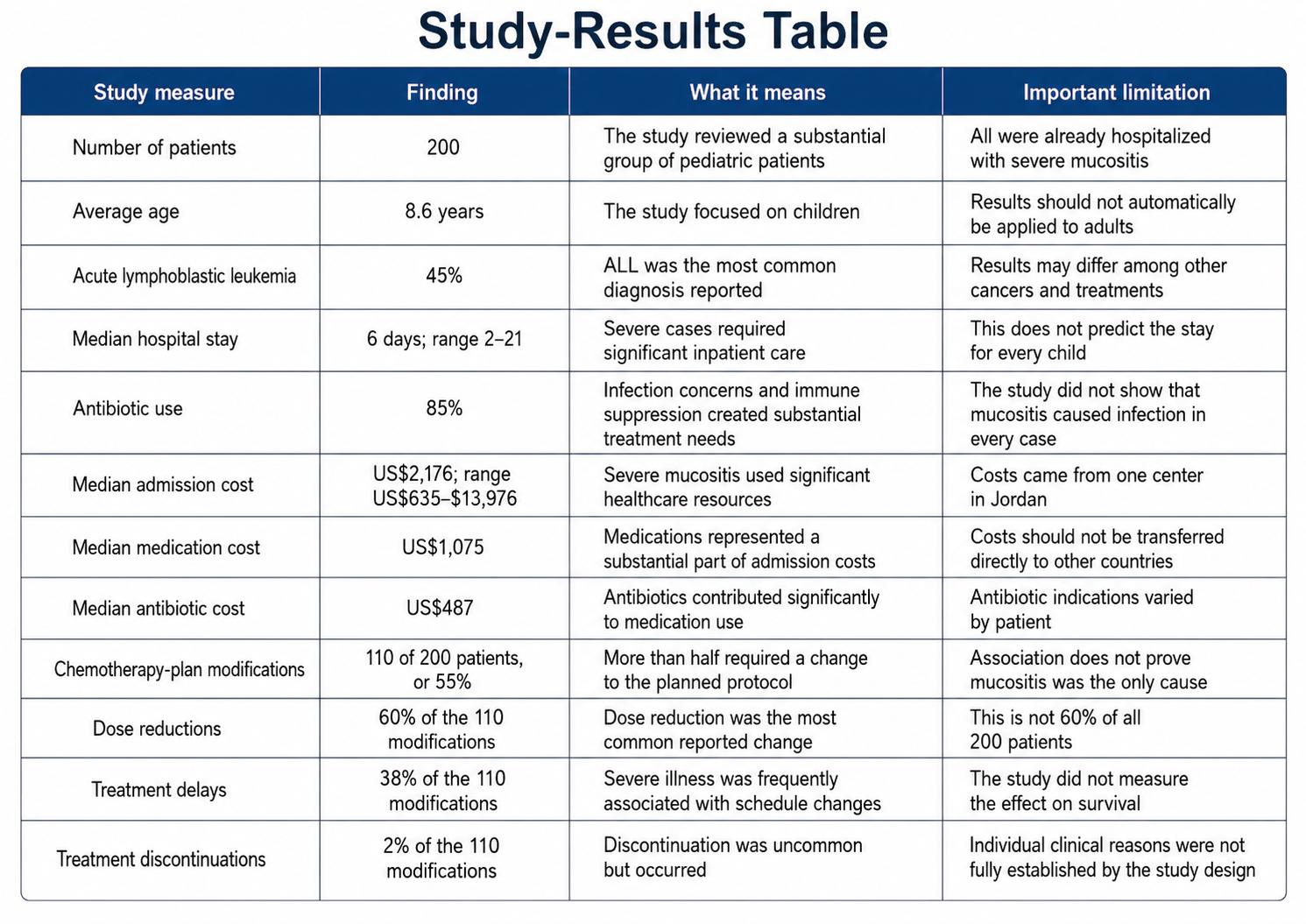
In a study of 200 children hospitalized with severe oral mucositis, 110—more than half—required a change to their chemotherapy plan. Among those treatment changes, 60% involved a dose reduction, 38% involved a treatment delay, and 2% involved discontinuing treatment.
Oral mucositis means inflammation and painful sores in the mouth. These sores can interfere with eating, drinking, swallowing, speaking, and sleeping.
The study involved children who were already hospitalized with severe mucositis. It does not describe every child receiving chemotherapy or every case of childhood cancer mouth sores. It was also a retrospective study conducted at one cancer center, which means researchers looked back at existing medical records rather than assigning treatments in advance.
Still, the findings make one point clear: severe oral mucositis is more than an uncomfortable pediatric cancer treatment side effect. Among hospitalized children, it was associated with substantial pain treatment, antibiotic use, healthcare costs, and frequent changes to chemotherapy plans.
What Is Oral Mucositis?
Oral mucositis is inflammation and injury affecting the tissue that lines the inside of the mouth.
It may cause:
Redness
Swelling
Burning or tenderness
Painful ulcers
Bleeding
Difficulty chewing
Difficulty swallowing
Difficulty drinking
Chemotherapy attacks rapidly dividing cancer cells. However, healthy cells lining the mouth also divide quickly. Some chemotherapy drugs can damage those cells, causing the mouth tissue to become inflamed, fragile, or ulcerated.
Oral mucositis is not the same as an ordinary canker sore or cold sore. A cold sore is commonly linked to a virus, while a canker sore may appear for several reasons unrelated to cancer treatment. Chemotherapy-related mucositis results from treatment-related injury to the mouth lining and may affect larger areas of tissue.
For a broader explanation of oral side effects, read What Is Chemo Mouth?.
Why Oral Mucositis Can Be Serious in Children
A child with a small, mildly painful sore may continue to eat and drink normally. Severe mucositis is different.
Pain can make swallowing water, food, or medicine difficult. Younger children may not be able to clearly explain where it hurts or how severe the pain has become. They may simply refuse meals, cry while eating, drool, or become unusually quiet.
As oral intake falls, children may be at risk of:
Dehydration
Weight loss
Inadequate calories or protein
Difficulty taking oral medicine
Increased pain
Unexpected hospital care
Open areas in the mouth may also create concern about infection, especially when chemotherapy has reduced the child’s immune defenses. This does not mean every mouth sore becomes infected. However, damaged mouth tissue can make infection assessment and careful monitoring more important.
What Did the Study Examine?
The study was conducted at one comprehensive cancer center in Amman, Jordan. Researchers reviewed records from January 2015 through December 2019.
The study included:
200 pediatric cancer patients
An average patient age of 8.6 years
45% of patients with acute lymphoblastic leukemia
Children receiving active cancer treatment
Children admitted to the hospital with severe oral mucositis
Patients undergoing bone marrow transplantation were excluded.
The researchers defined severe oral mucositis as mouth sores serious enough to interfere with oral intake and require intravenous opioid pain medication.
A retrospective study looks back at existing medical records. It can identify patterns and associations, but it usually cannot prove that one condition directly caused another outcome.
Severe Mouth Sores Led to a Median Six-Day Hospital Stay
The median hospital stay was six days. Hospital stays ranged from two to 21 days.
“Median” means that half of the hospital stays were shorter than six days and half were longer.
This does not mean every child who develops mucositis will spend six days in the hospital. The study only included severe cases that had already required admission.
Even so, a multi-day hospital stay can create a major burden for a child and family. Parents may miss work, siblings may need additional care, and the child may spend more time away from home while already managing cancer treatment.
Most Children Received Antibiotics
During hospitalization, 85% of the children received antibiotics.
The study did not establish that the mouth sores directly caused an infection in every child who received antibiotics.
Antibiotics may have been used because of:
Fever
Concern about bacterial infection
Weakened immune defenses
Damage to the protective mouth lining
Other findings identified by the medical team
Children receiving chemotherapy may need urgent evaluation when fever or possible infection develops. Families should follow the emergency instructions provided by their child’s oncology team.
The Financial Cost of Severe Oral Mucositis
The median total cost per hospital admission was US$2,176. Individual admissions ranged from US$635 to US$13,976.
The median medication cost was US$1,075. The median antibiotic cost was US$487.
These costs came from one cancer center in Jordan between 2015 and 2019. They should not be applied directly to hospitals in the United States or other healthcare systems.
However, the findings still demonstrate significant resource use. Severe oral mucositis may require hospital rooms, nursing care, intravenous medications, pain control, antibiotics, nutrition support, laboratory testing, and continued monitoring.
More Than Half Needed Changes to Their Chemotherapy Plan
Of the 200 children, 110 required a chemotherapy protocol modification.
Among the children whose plans were changed:
60% had a dose reduction
38% had a treatment delay
2% had treatment discontinued
The denominator matters. The study did not report that 60% of all 200 children received a dose reduction. Dose reductions accounted for 60% of the modifications made among the 110 children whose plans changed.
Oncology teams do not make these decisions casually. They consider the severity of the side effect, the child’s blood counts, infection risk, hydration, nutrition, organ function, cancer diagnosis, and the need to continue treatment safely.
A delay or reduction may be medically necessary to give the child time to recover. Parents should never stop, delay, or adjust chemotherapy without instructions from the oncology team.
Why Treatment Delays and Dose Reductions Matter
Chemotherapy plans are designed around specific drugs, doses, and schedules.
Severe side effects may make it unsafe to continue exactly as planned. In those situations, the oncology team must balance two goals:
Delivering effective cancer treatment
Protecting the child from serious toxicity
The study showed that severe oral mucositis was associated with changes to treatment plans, but it did not prove that mucositis worsened survival.
It also did not examine cure rates, relapse rates, long-term treatment effectiveness, or whether a specific delay affected an individual child’s outcome.
That distinction is important. The study supports better recognition and management of mucositis. It does not support telling families that every delay will compromise treatment success.
What the Study Does Not Prove
The study does not prove that:
Oral mucositis directly caused every treatment modification
Every child with mucositis will need hospitalization
Treatment changes led to poorer cancer outcomes
Mucositis worsened survival or reduced cure rates
One prevention strategy works for every child
The reported costs apply to every healthcare system
The findings apply to bone marrow transplant patients
The findings apply equally to adults
A specific supportive-care product prevents treatment delays
Important limitations include:
The study was retrospective
It came from one institution
It included only severe cases requiring hospitalization
It did not include a comparison group without severe mucositis
It focused on healthcare use and treatment plans, not long-term outcomes
Further research is needed to understand which prevention and treatment strategies work best for different pediatric chemotherapy regimens.
Signs of Oral Mucositis Parents Should Watch For
Parents and caregivers should watch for:
Red or swollen gums or mouth tissue
Small ulcers or open sores
Burning, tenderness, or mouth pain
Refusal to eat or drink
Crying during meals
Drooling
Trouble chewing or swallowing
Blood in the mouth
White patches
New or unusual bad breath
Reduced urination
Unusual tiredness or dizziness
White patches are not always mucositis. They may have another cause, including a fungal infection such as thrush, and should be evaluated by the care team.
When to Call the Pediatric Oncology Team
Contact the oncology team when a child has:
Mouth pain that interferes with eating or drinking
An inability or refusal to drink
Signs of dehydration
A new fever
Bleeding from the mouth
Trouble swallowing
Repeated vomiting
White patches or possible infection
Severe or worsening pain
Fewer wet diapers or much less urination
Unusual sleepiness, confusion, dizziness, or weakness
Do not rely on a universal fever threshold from a website. Follow the fever and emergency instructions provided by your child’s oncology team.
For more detail, see Cancer Treatment and Mouth Sores: When to Call Your Care Team.
How Oral Mucositis May Be Prevented or Managed
No single strategy prevents mucositis in every child.
The care plan may depend on the chemotherapy drug, cancer type, child’s age, blood counts, ability to complete mouth care, and the protocols used by the treatment center.
Supportive measures may include:
Oral assessment before and during treatment
A gentle mouth-care routine
A soft toothbrush when approved
Bland rinses recommended by the care team
Avoiding alcohol-containing mouthwash
Keeping the lips moist
Soft, moist foods
Cool or room-temperature foods
Prescribed pain medication
Hydration support
Help from an oncology dietitian
Cryotherapy involves cooling the mouth, often with ice chips, during selected chemotherapy infusions. It is only recommended in certain treatment settings.
Photobiomodulation, sometimes called low-level laser or light therapy, may also be used in selected settings where trained staff and appropriate equipment are available. Major guidelines stress that mucositis recommendations must be matched to the treatment being given.
Parents should not begin honey, supplements, probiotics, commercial mouthwashes, or homemade treatments without oncology-team approval. A product that is appropriate for one child may not be safe for another child with low blood counts, food restrictions, allergies, or infection risk.
Helping a Child Eat and Drink With Mouth Sores
Soft, moist foods may be easier to chew and swallow.
Examples include:
Soft scrambled eggs
Mashed potatoes
Oatmeal cooled to a comfortable temperature
Pudding
Yogurt, when medically appropriate
Smooth soups
Soft pasta
Foods moistened with broth, sauce, or gravy
Nutrition shakes approved by the care team
Ice chips or frozen treats when permitted
Foods that may irritate mouth sores include:
Spicy foods
Acidic foods
Rough or crunchy foods
Very salty foods
Very hot foods
Food-safety and neutropenia precautions may change which foods are appropriate. Ask the oncology team or dietitian for guidance tailored to the child’s blood counts and treatment plan.
Additional ideas are available in Nutrition and Hydration Tips for Cancer Patients.
Questions Parents Can Ask the Oncology Team
Is my child’s chemotherapy likely to cause oral mucositis?
What mouth-care routine should we follow?
Which mouth rinses are safe?
What symptoms should we report immediately?
What should we do if my child refuses fluids?
Which pain treatments are appropriate?
Would cryotherapy be useful for this chemotherapy regimen?
Is photobiomodulation available or recommended?
Should we meet with an oncology dietitian?
Could severe mouth sores affect the next chemotherapy treatment?
Frequently Asked Questions
What is pediatric oral mucositis?
Pediatric oral mucositis is inflammation and injury affecting the mouth lining of a child receiving cancer treatment. It can cause redness, burning, swelling, ulcers, bleeding, and pain when eating or drinking.
How soon can mouth sores appear after chemotherapy?
Timing varies by drug and treatment schedule. Early signs may appear within several days, while sores commonly become noticeable during the first one to two weeks after treatment.
Can mouth sores delay chemotherapy?
Yes. Severe mucositis may be associated with delays or dose changes. In the study, 110 of 200 hospitalized children required a chemotherapy-plan modification.
Does oral mucositis always require hospitalization?
No. Many cases can be managed without hospital admission. The study only examined children whose mucositis was already severe enough to require hospitalization and intravenous opioid medication.
Can oral mucositis cause infection?
Mucositis damages the protective lining of the mouth and may create a pathway for germs, especially when immune defenses are low. However, not every child with mucositis develops an infection.
What can a child eat with mouth sores?
Soft, moist, mild foods are often easier to tolerate. Examples include mashed potatoes, soft pasta, scrambled eggs, cooled oatmeal, pudding, and approved nutrition drinks.
Should parents use over-the-counter mouthwash?
Not without approval from the oncology team. Some mouthwashes contain alcohol or other ingredients that may burn, dry, or irritate damaged tissue.
When should caregivers call the oncology team?
Call when pain interferes with eating or drinking, the child cannot stay hydrated, sores are worsening, bleeding occurs, white patches appear, swallowing becomes difficult, or the child develops a fever.
Can oral mucositis be prevented?
Risk and prevention depend on the treatment. Consistent oral care, early assessment, selected cryotherapy protocols, and photobiomodulation in appropriate settings may help, but no method prevents every case.
Does severe oral mucositis affect cancer survival?
This study did not evaluate survival, relapse, or cure rates. It found that severe oral mucositis was associated with substantial healthcare use and frequent treatment-plan modifications.
The Bottom Line
Severe oral mucositis is not merely a painful inconvenience. Among 200 hospitalized pediatric cancer patients, it was associated with multi-day hospital stays, intravenous pain treatment, frequent antibiotic use, substantial costs, and changes to chemotherapy plans.
The study does not prove that mucositis worsens survival. Its practical lesson is simpler: report symptoms early, follow the child’s mouth-care plan, and contact the oncology team before pain, dehydration, or difficulty eating becomes severe.
Study Results Table
References
Alsheyyab F, Al-Momani D, Kasht R, et al. “Impact of severe oral mucositis in pediatric cancer patients on resource utilization and cancer treatment plans.” International Journal of Clinical Pharmacy. 2021;43:1322–1326.
PubMed | DOI and journal pageElad S, Cheng KKF, Lalla RV, et al. “MASCC/ISOO clinical practice guidelines for the management of mucositis secondary to cancer therapy.” Cancer. 2020.
PubMed | Full textNational Cancer Institute. “Oral Complications of Chemotherapy and Head/Neck Radiation.”
NCI PDQ guidanceAmerican Cancer Society. “Mouth Sores and Pain.”
American Cancer Society guidanceSt. Jude Children’s Research Hospital. “Mouth and Throat Sores in Childhood Cancer.”
Together by St. JudeDocimo R, D’Anastasio M, Bensi C. “Chemotherapy-induced oral mucositis in children and adolescents: a systematic review.” European Archives of Paediatric Dentistry. 2022.
PubMedMazhari F, Shirazi AS, Shabzendehdar M. “Management of oral mucositis in pediatric patients receiving cancer therapy: a systematic review and meta-analysis.”
PubMedSt. Jude Children’s Research Hospital. “Light Therapy for Oral Mucositis.”
Together by St. JudeSt. Jude Children’s Research Hospital. “Soft Food Diets.”
Together by St. JudeKharait S, et al. “Supplementation with 2′-fucosyllactose, a prebiotic human milk oligosaccharide, in a magnesium-containing medical food reduces chemotherapy-induced mucositis in Wistar rats.” Frontiers in Nutrition. 2026.
Frontiers in Nutrition
For more information on how HuMOLYTE can support your gut health during chemotherapy, visit our product page or consult your health care provider.
This blog was reviewed by Dr. Sourabh Kharait.
This blog is for educational purposes only and is not intended as medical advice. Always consult with your healthcare provider before making any changes to your treatment plan, hydration strategies, or diet. The information provided here is based on general insights and may not apply to individual circumstances.
