What Is Cancer? How It Develops, Spreads, and Is Treated
Cancer is not one disease. It is a large group of related diseases that can begin almost anywhere in the body. Cancer starts when abnormal cells grow and divide without normal control. These cells may invade nearby tissues and damage organs. Some cancer cells can also travel through the blood or lymph system and form new tumors in distant parts of the body. The way cancer behaves, spreads, and responds to treatment depends on the type of cell in which it began.
A Simple Definition of Cancer
Cancer is a group of diseases in which abnormal cells continue growing and dividing when they should not.
Cancer cells may:
Invade nearby tissue
Damage normal organs
Interfere with normal body functions
Spread to other parts of the body
Cancer can begin in nearly any tissue or organ, including the skin, lungs, breast, prostate, colon, blood, bone, brain, and lymphatic system. The place where the cancer first develops is called the primary site.
How Normal Cells Grow and Divide
The body contains trillions of cells. Most normal cells follow an organized life cycle.
Normal cells generally:
Grow when the body needs new cells
Divide in a controlled way
Repair damage when possible
Perform specific jobs
Stop dividing when instructed
Die when they become old or badly damaged
For example, skin cells replace cells lost from the surface, while blood-forming cells in bone marrow continually produce new blood cells.
Genes inside each cell act like instructions. They help control when a cell grows, divides, repairs itself, or dies. When these controls work properly, the body maintains a balance between new cells and cells that are removed.
How Cancer Cells Are Different
Cancer cells have genetic changes that affect the instructions controlling their behavior.
Cancer cells may:
Ignore signals telling them to stop growing
Continue dividing after becoming damaged
Avoid the normal process of cell death
Invade nearby tissues
Encourage new blood vessels to grow
Hide from or change how the immune system responds
Travel to other parts of the body
Not every cancer grows quickly. Some cancers develop and spread slowly, while others behave more aggressively. This is one reason two people with cancers in the same organ may have different treatment plans and outcomes.
Do All Cancers Form Tumors?
No. Many cancers form solid tumors, but some cancers mainly affect blood-forming tissues or cells circulating in the blood.
Examples include:
Leukemia: Usually begins in blood-forming tissue such as bone marrow and often does not create one solid mass.
Lymphoma: Begins in cells of the lymphatic system. Some lymphomas form enlarged lymph nodes or masses, while others may be more widespread.
Multiple myeloma: Begins in plasma cells, a type of white blood cell found in bone marrow.
Solid tumors are more common in cancers that begin in organs, skin, bone, muscle, or other tissues.
Benign Tumors Versus Malignant Tumors
A tumor is an abnormal mass of tissue. Not every tumor is cancer.
A benign tumor is not cancerous. It usually stays in one place and does not spread to distant organs.
A malignant tumor is cancerous. It can invade surrounding tissue and may spread to other parts of the body.
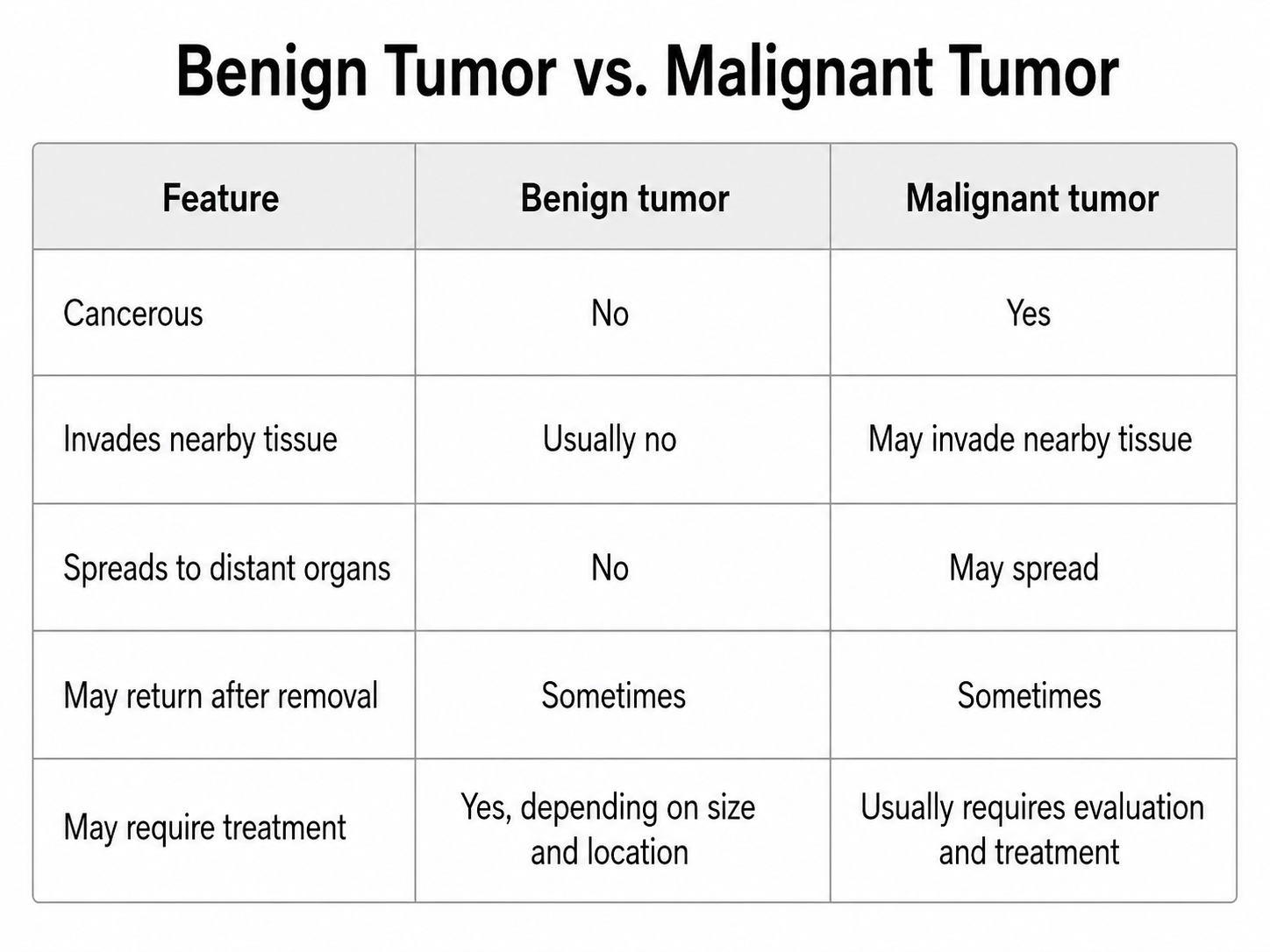
Benign does not always mean harmless. A benign brain tumor, for example, can cause serious problems by pressing on nearby structures. Benign tumors may also produce hormones, block organs, or cause pain or bleeding.
What Causes Cancer?
Cancer develops because of changes in genes that control cell growth, repair, and survival. These genetic changes may build up over time.
They may result from:
Aging: Cells have had more time to collect genetic changes.
Random copying errors: Mistakes can occur when cells copy their DNA before dividing.
Tobacco exposure: Tobacco smoke contains chemicals that damage DNA.
Ultraviolet radiation: Sunlight and tanning devices can damage skin-cell DNA.
Certain infections: Some viruses and bacteria can increase cancer risk.
Environmental or workplace exposures: Examples include asbestos and certain chemicals.
Chronic inflammation: Long-term inflammation may contribute to damage in some tissues.
Inherited genetic variants: Some people are born with changes that increase their risk.
Cancer usually does not have one simple cause. It often develops through a combination of aging, inherited susceptibility, environmental exposures, lifestyle factors, infections, and chance.
A cancer diagnosis should not be treated as evidence that the patient caused the disease.
Is Cancer Inherited?
Most cancers are not passed directly from parent to child.
However, some people inherit a genetic variant that raises their risk of developing one or more cancers. Inheriting such a variant does not mean cancer is certain. It means the person may have a higher risk than someone without that variant.
Family patterns that may lead a doctor to recommend genetic counseling include:
Several relatives with the same or related cancers
Cancer diagnosed at an unusually young age
More than one primary cancer in the same person
A known inherited cancer-related variant in the family
Inherited genetic testing looks for changes a person was born with and may have passed to family members.
Tumor genetic testing, also called biomarker testing or somatic testing, looks for changes within the cancer itself. These results may help doctors classify the cancer or choose treatment. Tumor testing does not replace inherited genetic testing.
Cancer Risk Factors
A risk factor is something linked with a higher chance of developing a disease.
Common cancer risk factors include:
Increasing age
Tobacco use
Alcohol
Ultraviolet exposure
Certain infections
Obesity
Environmental or occupational exposures
Family history
Inherited genetic variants
Having a risk factor does not mean a person will develop cancer. Likewise, people without obvious risk factors can still develop cancer.
For example, tobacco exposure clearly increases the risk of several cancers because tobacco products contain DNA-damaging chemicals. But not every person who uses tobacco develops cancer, and some people with lung cancer have never smoked.
The Major Types of Cancer
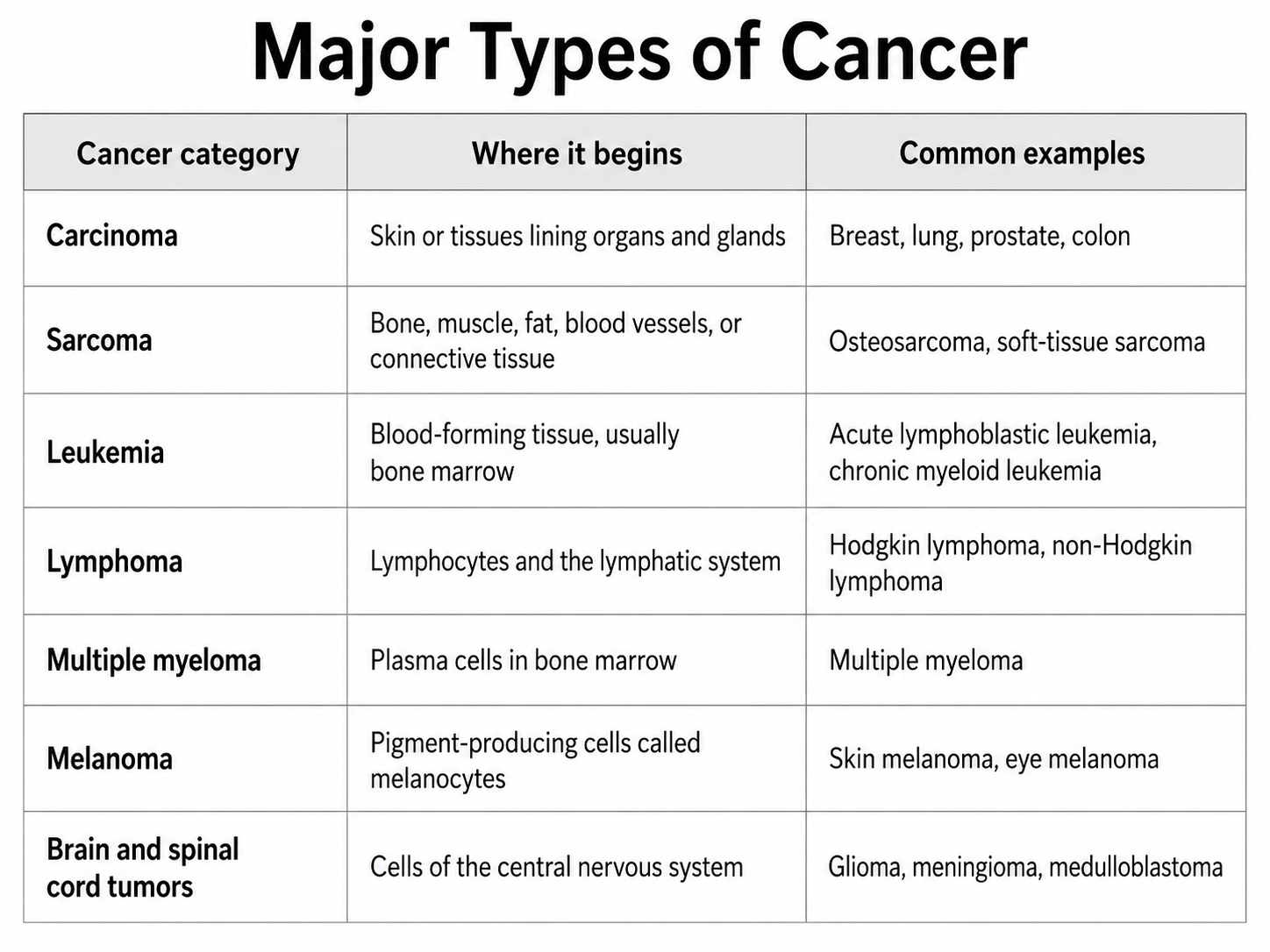
Doctors often classify cancer by the type of cell or tissue where it begins.
Carcinoma
Carcinomas begin in epithelial cells, which cover the body’s surfaces and line many organs. Most common solid cancers are carcinomas.
Sarcoma
Sarcomas begin in bone or connective tissues such as muscle, fat, cartilage, nerves, or blood vessels.
Leukemia
Leukemia begins in blood-forming tissue and leads to the production of abnormal blood cells.
Lymphoma
Lymphoma begins in lymphocytes, white blood cells that help the immune system.
Multiple myeloma
Multiple myeloma begins in plasma cells, which normally make antibodies.
Melanoma
Melanoma begins in melanocytes, the cells that produce pigment.
Brain and spinal cord tumors
These tumors begin in cells of the brain, spinal cord, or nearby supporting tissues. Some are malignant, while others may be considered benign but can still cause serious harm because of their location.
How Cancer Spreads
The spread of cancer from its original location to another part of the body is called metastasis.
Cancer may spread through a series of steps:
Cancer cells break away from the original tumor.
They invade nearby tissue.
They enter blood vessels or the lymph system.
They travel to another part of the body.
Some cells leave the blood or lymph vessel.
They may begin growing and form a new tumor.
Most cells that break away do not successfully form a metastatic tumor. To survive, they must complete several difficult steps and find conditions that allow them to grow.
Metastatic cancer keeps the name of the original cancer. For example, breast cancer that spreads to the lung is still metastatic breast cancer, not lung cancer.
The cells in the lung tumor began as breast cancer cells and are usually treated as breast cancer. Not all cancers spread, and different cancer types tend to spread to different organs.
Why Cancer Can Be Dangerous
Cancer can cause harm in several ways.
It may:
Invade and destroy healthy tissue
Block an organ, airway, blood vessel, or duct
Cause bleeding
Replace normal blood-forming cells
Affect the production of hormones
Spread to vital organs
Change how the body uses energy
Cause weight loss, weakness, pain, or fatigue
Blood cancers may interfere with the production of healthy red blood cells, white blood cells, or platelets. Solid tumors may press on organs or prevent them from working normally.
The effect of cancer depends on its location, size, biology, and whether it has spread.
How Cancer Is Diagnosed
There is no single test that diagnoses every cancer.
The process may include:
A medical history
Physical examination
Blood or urine tests
Imaging such as X-rays, CT scans, MRI, ultrasound, or PET scans
Endoscopy
Biopsy
Examination by a pathologist
Biomarker testing
Inherited genetic testing when appropriate
A biopsy removes cells or tissue so a pathologist can examine them. For many cancers, biopsy is the main way to confirm the diagnosis, although the exact process varies by cancer type and medical situation.
Tumor biomarker testing
Biomarker testing looks for genes, proteins, or other features in the tumor. The results may help identify the cancer subtype, estimate how it may behave, or determine whether a targeted treatment is likely to help.
Inherited genetic testing
Inherited testing looks for genetic variants present throughout the body that may raise cancer risk and may also be relevant to family members.
These tests answer different questions and are not interchangeable.
Cancer Stage Versus Tumor Grade
Cancer stage and tumor grade describe different features of the disease.
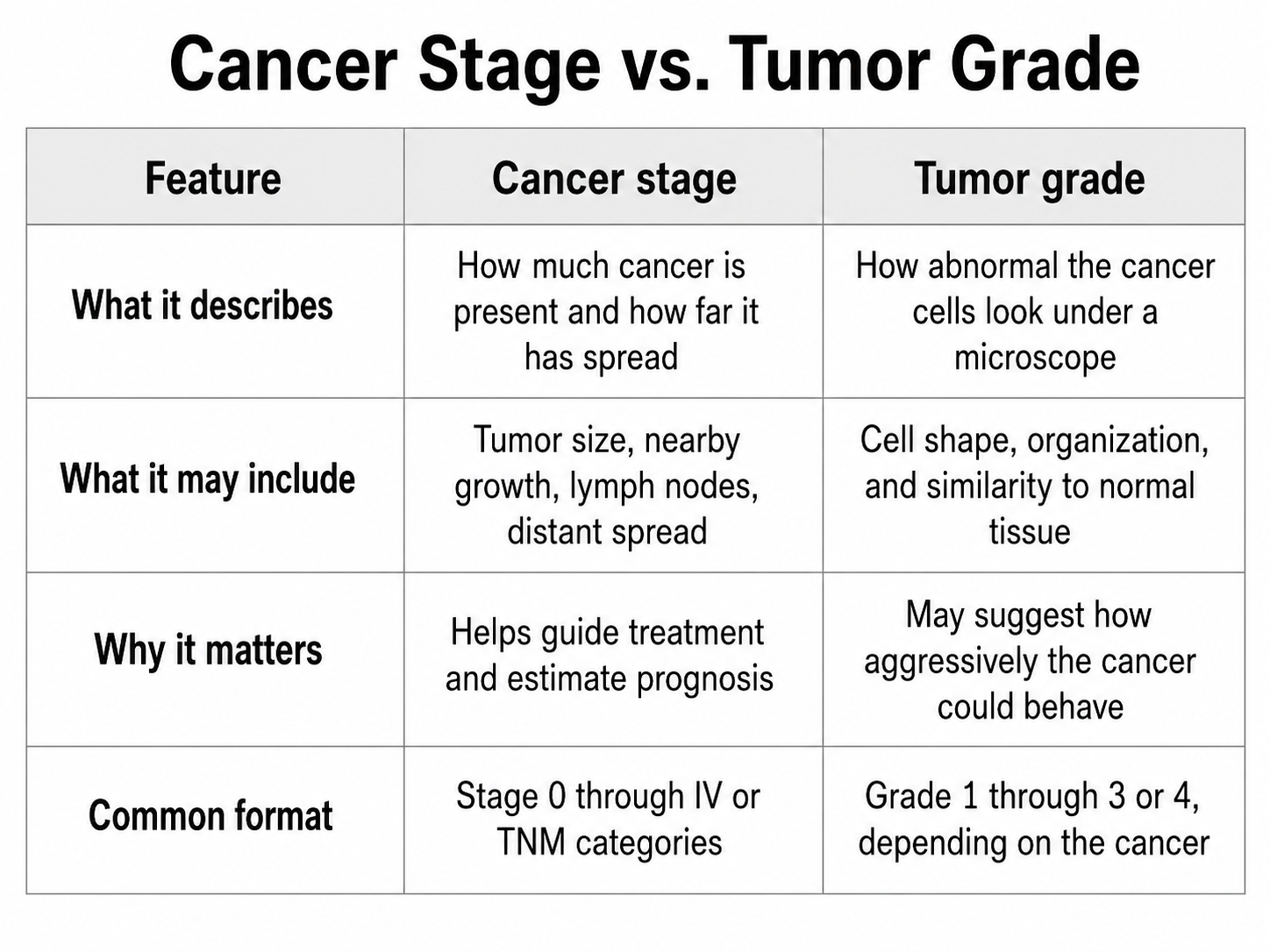
Stage describes the extent of the cancer. It may include the size of the original tumor, nearby lymph-node involvement, and distant spread.
Grade describes how abnormal the cells and tissue look under a microscope. Higher-grade cells often look less like normal cells and may be more likely to grow aggressively.
A high-grade cancer is not automatically a high-stage cancer. A small cancer that has not spread can be high grade, while a lower-grade cancer can sometimes be diagnosed at an advanced stage.
For a fuller explanation, see Understanding Cancer Staging: What Stages 0–4 and TNM Really Mean
How Cancer Is Treated
Cancer treatment depends on the cancer type, stage, grade, biomarkers, location, overall health, treatment goals, and patient preferences.
Treatment may include:
Surgery: Removes the tumor or affected tissue.
Radiation therapy: Uses high-energy radiation to damage cancer cells.
Chemotherapy: Uses drugs that kill cancer cells or stop them from growing.
Immunotherapy: Helps the immune system recognize or attack cancer.
Targeted therapy: Targets specific proteins or changes that help cancer grow.
Hormone therapy: Slows cancers that depend on hormones.
Stem-cell transplant: Replaces blood-forming cells after intensive treatment.
Active surveillance: Closely monitors certain slow-growing cancers before treatment is needed.
Supportive care: Manages symptoms and treatment side effects.
Palliative care: Improves comfort and quality of life at any stage of serious illness.
Not everyone with cancer receives chemotherapy. For some cancers, surgery alone may be recommended. Others may be treated with radiation, hormone therapy, immunotherapy, targeted therapy, or a combination of treatments.
Can Cancer Be Cured?
Some cancers can be cured. Others can be controlled for many years, while some are more difficult to treat.
The outlook depends on:
Cancer type and subtype
Stage
Grade
Biomarkers
Response to treatment
Overall health
Available treatment options
Doctors may use the word remission when the signs and symptoms of cancer have decreased.
Partial remission means some signs of cancer remain but have improved.
Complete remission means all detectable signs of cancer have disappeared.
Complete remission does not always mean the cancer can never return. The word cure generally means there are no remaining traces of cancer and it is not expected to come back. Doctors may be cautious about using that word because the chance of recurrence differs by cancer type and individual circumstances.
Questions to Ask Your Cancer Care Team
What type and subtype of cancer do I have?
Where did the cancer begin?
Has it spread?
What is the stage?
What is the grade?
Were any important biomarkers found?
Do I need genetic counseling or inherited genetic testing?
What treatment options are available?
What is the goal of treatment?
Where can I find trustworthy information about my diagnosis?
Frequently Asked Questions
Is cancer one disease?
No. Cancer is a broad group of diseases with different causes, behaviors, treatments, and outcomes.
Does every cancer form a tumor?
No. Many cancers form solid tumors, but leukemia and some other blood cancers do not usually form one solid mass.
What is the difference between a benign and malignant tumor?
A benign tumor is not cancer and does not spread to distant organs. A malignant tumor is cancerous and may invade nearby tissue or spread.
Is cancer inherited?
Most cancers are not directly inherited. Some people inherit genetic variants that raise their cancer risk.
What causes normal cells to become cancerous?
Cancer begins when genetic changes disrupt the normal controls governing cell growth, repair, and death. These changes may result from aging, random errors, inherited variants, infections, or environmental exposures.
How does cancer spread?
Cancer cells may invade nearby tissue, enter blood or lymph vessels, travel through the body, and form a tumor in another organ.
Is metastatic cancer the same as cancer in the new organ?
No. It keeps the name of the original cancer. Colon cancer that spreads to the liver is metastatic colon cancer, not liver cancer.
How do doctors diagnose cancer?
Diagnosis may involve an examination, blood tests, imaging, endoscopy, biopsy, pathology, biomarker testing, and genetic testing.
What is the difference between cancer stage and grade?
Stage describes how much cancer is present and where it has spread. Grade describes how abnormal the cells look and how aggressively they may behave.
Does everyone with cancer need chemotherapy?
No. Treatment may involve surgery, radiation, immunotherapy, targeted therapy, hormone therapy, active surveillance, or other approaches.
Can cancer be cured?
Some cancers can be cured. Others may be controlled for years. The answer depends on the cancer type, stage, biology, response to treatment, and overall health.
References
National Cancer Institute. “What Is Cancer?” National Cancer Institute. Reviewed October 11, 2021.
National Cancer Institute. “Risk Factors for Cancer.” National Cancer Institute.
National Cancer Institute. “Metastatic Cancer: When Cancer Spreads.” National Cancer Institute.
National Cancer Institute. “How Cancer Is Diagnosed.” National Cancer Institute.
National Cancer Institute. “Cancer Staging.” National Cancer Institute. Reviewed October 14, 2022.
National Cancer Institute. “Types of Cancer Treatment.” National Cancer Institute.
American Cancer Society. “What Is Cancer?” American Cancer Society.
American Cancer Society. “What Are Neoplasms and Tumors?” American Cancer Society.
American Cancer Society. “Cancer Types.” American Cancer Society.

About Dr. Sourabh Kharait
Dr. Sourabh Kharait (MD / PhD) is Clinical Nephrologist and Medical Director of Clinical Trials at Summit Nephrology Medical Group, and the Founder and CEO of IGH Naturals, a platform company that designs Functional Foods and Nutritional products for athletes and patients with chronic diseases.Whatever it is, the way you tell your story online can make all the difference.
For more information on how HuMOLYTE can support your gut health during chemotherapy, visit our product page or consult your health care provider.
This blog is for educational purposes only and is not intended as medical advice. Always consult with your healthcare provider before making any changes to your treatment plan, hydration strategies, or diet. The information provided here is based on general insights and may not apply to individual circumstances.